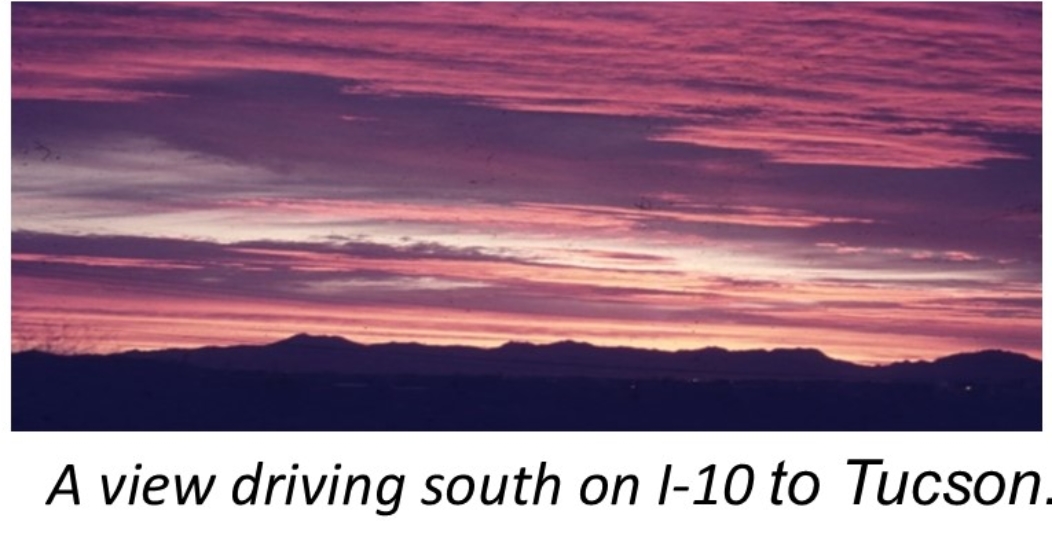
The Most Valuable Assets We Have Are Seldom Properly Utilized More So for Those Who Need It the Most
Towards Tucson, AZ
“DO NOT CALIFORNICATE OREGON.” I read the bumper sticker on the flatbed truck in front of me. Too late? Some thought so. Irked, I tried to see the face of the driver but couldn’t. An old rifle hung across the truck’s rear window and thick, huge, heavy, naked tree trunks laid on the bed of the truck, visible through the dust generated by massive rubber tires rolling over the crude logging road. Recently, I had had a heated discussion with other university students on the pros and the cons of the lumber industry’s clearcutting activities taking place on Oregon’s forests.
I found myself on the critical side of the argument. Expounding my thoughts on the ecological damage of clearcutting, with ugly gashes left across the mountains and what took hundreds of years to grow now gone in a few days. At the age of 18, I knew it all. However, in the middle of the argument, as I was expounding my convictions, I suddenly realized something nagging at me and stopped. What did I know about logging? Not much. What would be the best way to acquire more knowledge? I called a logger, Steve Reid, a recent acquaintance, and offered to work for him for free for four weeks. I told him I wanted to learn.
Second to underwater welding, logging is considered the next highest level of dangerous jobs. Steve invited me to his home in the mountains, so I could learn a few things. I learned a lot about the strength of character and specifically about the independent pioneer spirit of Oregonians, self-sufficiency, lesson to remember, a spirit they did not want Californicated.
A year after I graduated, in the summer of 1975, not sure what to do with my life, I joined VISTA (Volunteers In Service To America) a volunteer government program. I had earned a degree in Architecture and one in Psychology from the University of Oregon. In Oregon, it rains all the time and it was time to dry up. I requested to be sent to the hottest and driest place they could find me. So, VISTA sent me to Tucson, AZ.
Oregon’s winters were not as cold as the ones I had for six months in high school at Cardinal Farley Military Academy in Rhinecliff near Poughkeepsie, NY. Now after my years in Oregon, I would welcome the dry blistering heat of cactus country in Arizona, or so I thought.
Just before leaving, my friend Jimmy offered to sell me his red, sporty GM in installment payments. He suggested that I took it with me for a week since I intended to come back for a summer high school class reunion. It was a wonderful breathtaking trip down south through San Francisco hugging the majestic coast along Highway 1 and Route 101 through Monterey, Carmel-By-The-Sea, and Big Sur, where I stopped for lunch enjoying the Beach Boys’ song I Get Around. Then I navigated the curvy roads with the Mamas and the Papas’ California Dreaming on the radio, the roaring ocean on the right and magnificent green vegetation on the cliffs to my left all the way down to San Luis Obispo, Santa Barbara, Malibu, Long Beach, and San Diego. I breathed in the local flavor, swam on the ocean, and talked to many beautiful young people. California seemed to be so far ahead of the rest of the United States in just about everything.
Then across the mountains and into the desert, through Yuma, across the Sonoran National Monument, I drove over to Tucson, AZ. I had done this once before on a motorcycle. Now with only the necessary clothes to fit in the small sports car, I was on my way to a new life!
However, the night before I left, the wife of a friend of Jimmy, knowing I was leaving, unexpectedly came to my apartment for the first time ever. She got naked and jumped in bed with me. She was sexy, hot, and very tempting. Mumbling with her right breast pressing on my face, I told her I would not do this to my friend. Besides, I don’t screw other people’s wives. She left unhappy and I guess she meant to make me pay for it.
When I came back a week later, this lady had gotten upset by what she perceived as personal rejection. She told her version of the story to Jimmy and his wife to make me the culprit and her the victim. Now, my friend would not sell me the GM. I had no wheels for my way back and no money until my future first VISTA payment, and I was now stuck in Oregon.
As a student, I had designed a large addition to Steve Reid’s house, the now very successful logger, whom I had argued with the year before, in the Douglas Fir forest mountains of Oregon, while sharing with him and his family four weeks of rough outdoor work in a land overlooking Winberry Creek. Steve and I had become good friends. He lent me the money to buy a used light green Dodge pick-up truck. This time, I loaded its bed with everything I owned including furniture, boxes, and more boxes of papers. I covered it with a well tied-down canvas and left the pioneer green, muddy, and beautiful country of Oregon - probably for good.
Changing routes, I went east across the mountains to Idaho. From flush hilly foliage to flat arid land, then south to Utah and Arizona on local roads, through the beautiful town of Flagstaff, past Phoenix and then to Tucson. I found many similarities between Phoenix and Tucson like those between Portland and Eugene, such as size, distances, and their university culture.
I had with me, inherited from my older brother, my most priceless possessions, a leather jacket from the English Air Force WWII pilots. That leather coat had weathered the chill and snow of New York, New Jersey, Vermont, Chicago, Oregon, Seattle, Alaska, and the many winds flowing across the American highways. Inside it I felt bulletproof. However, strength has its weaknesses. One day riding a motorcycle at high speed on the mountain roads of California, a bee or a wasp hit my glove, bounced inside my sleeve, up my arm, all the way to my back, where it stung painfully between my shoulder blades in the place you can’t reach, much less while doing over 90 mph. I held on to that priceless jacket through thick and thin. Like a second skin, it went with me everywhere, until someone stole it. I have never liked thieves. The experience also taught me to never get so deeply attached to any material object ever again, and I haven’t.
Down the mountains, through the wonderful town of Flagstaff with so many trees, I found it ironic that at first the lack of trees was the reason I didn’t like Tucson very much. Tucson was hot, dry, and uncomfortable day and night with hardly a shady tree and only skinny, thorny cactuses. However, while it took me three years to acclimate, it is now one of my favorite cities. I love the place and its surroundings.