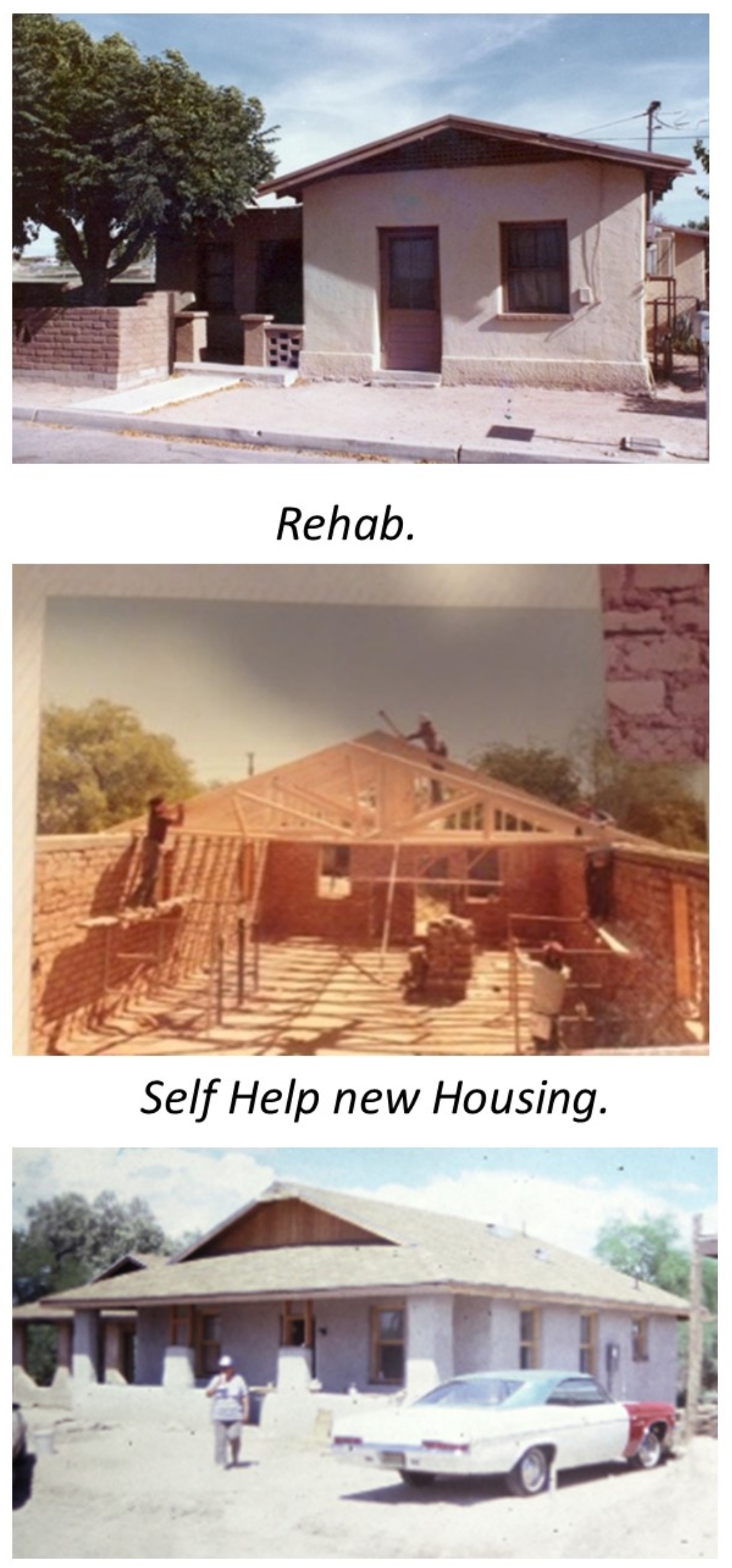

A Casualty
Not all is good. A hot summer morning, one of the crew leaders came running around the corner looking for me. “Did you hear what happened?”
My face must have shown that I didn’t.
“Rene’s cousin was visiting him from out of town and some rival pachucos shot him dead last night on Rene’s front porch.”
After I let that information sink in, I asked “What did Rene do? Was he involved in the cause of the shooting?”
“No. He wasn’t there then. He’s there now.”
Earlier I had seen two police cars in the Barrio, which was rare.
“His family okay?”
“Yes. No one else was hurt. Just his cousin.”
“Thank Goodness. That is rough. We’ll find out more in due time. Tell Rene to take a day or two off to deal with issues as he may have to but no more than three.”
‘He doesn’t want to. He says working here is the best thing he has going in his life, and he doesn’t want to lose that.”
“He won’t. He is a good man.” Rene was in fact an extraordinary man. Outwardly quiet, industrious, high strung but with a lot of self-control. He also had a young, beautiful wife already with a child. They were renting, and his dream was to buy a house. As a man, Rene had grown to be what I hoped Isabelle would grow up to be as a woman. Hard working, conscientious, and independent individuals with a bright future, despite their turbulent surroundings, but then, we all have our own turbulent surroundings to deal with. Survival takes many paths. Fortunately, this type of crime was disappearing in this Barrio.
A Better Result
As I walked peacefully down the shaded side of the sidewalk of Convent Avenue minding my own business, on another one of those good sunny working days, a young woman approached me. She was visibly very angry. Her pale face was flushed as she said, “You tell your guys up on that roof over there,” and pointing behind her she waved her finger at one of the houses undergoing repairs, “that they should not whistle at a woman. That behavior is unacceptable. Tell them to stop it.”
Huh? Most men can imagine the many thoughts crossing my mind. I almost didn’t follow her request, but I did. I felt a bit silly climbing up the ladder onto the roof to talk to a crew of seven males at the peak of their hormone years that they should not whistle at a woman. I was not the moral police. I felt out of place. However, my upbringing said that even if I had engaged in similar behavior in my past, the more reason why, given the opportunity to stop such behavior, even as futile as it felt to be, I should make use of it. Hypocritical? Not really. We all can be taught by others who have learned from their mistakes. That’s how civilizations grow. I understood that if a woman doesn’t want to be treated in such a way, she had the right to request respect.
My upbringing triumphed. In my home, you were taught to respect everyone. I could think of many mistakes I may have made in my treatment of women, but I did what was right that day. On top of that boiling hot roof I said, in Spanish:
“Listen guys, what you do on your own time, even if you should not, is your own business, but while you are working for the TBA, please do not whistle at women when they walk by. It is not proper.” I didn’t think they heard a word I said. The English-speaking youth in the group said in English, “What did you say?” I repeated it under the hot Arizona’s sun to the silence of the refreshing wind and to the humming noise of the roof vamp cooler. No one said a word.
Three days later I crossed paths with the previously angry lady who now had a broad smile and said, “Thank you, I walked by that house again and they didn’t whistle at me.”
I was dumbfounded. Could a woman be happy that men didn’t pay her attention? But in fact, she had succeeded in having men pay her respectful attention. Good for her! I tell this story because in my humble opinion this was a case for intervention on my part because they were up on that roof and my responsibility while they were working for the TBA. The same would not apply to the request I often got to tell boys not to pee on the exterior walls. A business cannot interfere with what people do in their personal time unless it affects the business.
That peeing performance would disappear on its own as other conditions underwent the transformation we were experiencing in the Barrio. Of course, there was to be no peeing in public while working for the TBA. Maybe in some cultures, certain unusual behaviors by youths may be more acceptable than in others. Clashes between cultures often come about from lack of understanding, but sexual overtones require consent no matter what sex and no matter what the culture. Women deserve the same respect men expect from each other.
Another Casualty
Once a male made a pass at me and, without my consent, aggressively put his hand on my crotch. I knocked out two of his teeth and broke his arm in at least one place. A woman should be able to do the same thing, and if they can’t, then someone needs to do it for them.
Lukewarm Results
One of the new practices I tried to implement unsuccessfully at our board meetings was to talk for ten minutes about the hidden, powerful tools that could be used to control and manipulate the group and how to prevent it. A good understanding of Robert’s Rules of Order helps, but everyone must know them to use them. One manipulative trick often used is to divert the conversation from something you don’t want discussed, or resolved, by bringing up a related but new controversial issue that causes arguments, so that the previous topic is forgotten.
Knowledge is sharing power. I started by sharing one of my favorite tools. When a person grabs the floor and stubbornly doesn’t let others speak up, to try to argue against him is often futile. It becomes a shouting match. I use a strategy that often works. I interrupt, but I start by agreeing with what I can of what the person has said, always agree first, then move the conversation to a neutral topic, and then present an opposing view, or let others do it. A trick in community organizing is that with three people working very well together you can control or manipulate any meeting, of any group, of any size. I will elaborate on this later. It is incredibly powerful, but it requires impressive coordination. This attempt at ten minutes of education on how not to be manipulated in board meetings was cut off by Danny Cross, who stated that it was a waste of time and we had other more important things to do.
“If anyone wants to learn how meetings are conducted,” he started, “let them read Robert’s Rule of Order on their own. Now let’s move on.” He was proving my point by doing to me exactly what I was telling others they needed to avoid. Danny was a stereotypical, clean-cut, all American poster boy: intelligent, articulate, and very well mannered. He had the information. He knew how to conduct meetings and how the game was played. It gave him an advantage and he did not want to share that knowledge with others, especially not with a cultural minority group on whose turf he was now in the minority, but he still felt superior, an elite. I never knew Danny either to side with the so-called liberal elements that were moving into the neighborhood, and who pretended to be supportive while digging their paws into the terrain to change the status quo of the area in their favor, nor with the unbendable right that recognize no variations on established traditions. He was a ‘solo’ in this regard and he was effective. I shouldn’t blame him too much. I recognize I was already biased against him for what he had done before with the fountain.
Danny was a newspaper guy. Newspapers claim to be the champions of free speech, but they hide behind freedom of speech every time anyone tries to call them to task. In fact, in my opinion, newspapers are manipulators of news, people manipulators. They choose and control what gets published and what does not. It is okay to own a newspaper and publish what you wish to publish, but ‘free’ speech does not always mean ‘true’ speech, nor the whole truth, nor free. It is paid for and has multiple conditions.
Infiltration Into the System
Newspapers are extortionists. Many make their money by bottle-necking the circulation of information to serve their ideology. Be it a conservative paper or a liberal paper, it makes no difference what their slant is. They can and do withhold negative information on politicians in exchange for favors. If the politician does not comply, then suddenly, negative news, true or false, begin to surface about the personal life of that politician. Freedom of Speech sounds good, but in the media, it is not free. It’s like a mafia in high heels and suits. Slanted ideology wins despite stated intentions. Newspapers print the truth only as they see it, no way to fight them. They have a monopoly on their form of so-called ‘free’ expression. The media is the only entity that does not have a reasonable balance of power, thus is possible to infiltrate and manipulate. Self-policy doesn’t work. The only redress is for the population to stop buying the paper or stop watching the TV news, but these efforts are easily overcome by clever PR. Even the courts are hesitant to infringe on ‘Freedom of Speech’. I agree fully with freedom of speech, but what about manipulation of speech? There are no checks and balances on the power of the media. One of the biggest sin of the media is the omission of critical truthful data from their reporting that would have obliterated the bias in their presentation. What they DELIBERATELY fail is to say certain things, or wait the timing is right for them to expose it. That’s what makes the media a mafia.
This is how all of it works. As you move your way up the ladder in the newspaper power pyramid, you undergo the process of sublimation of goals, slowly to end up becoming a part of the ongoing problem and not part of the solution. If not, you are weeded out or will be awarded no promotions. The same thing happens within a party when you get elected to a political position. As a freshman senator, you are taught to play the game. To get help for reelection, you go through the process of sublimation of goals. After several terms and a seniority positions, you are part of those making sure new members follow along the party line and the distortion of original ideals, soon you believe that what is good for the party and what is good for you are the same thing. And by then you don’t care what is best for the country.
Think of yourself as a young, idealistic senator advocating for term limits or for reverting your privileged health insurance to the one every other citizen has. The others will not allow you to promote taking away of their perks. By the time you get, if you do, or they let, to their level of decision-making, you will have already fallen for the convenience of it all. At first you are fighting for your morals, at the end it is for your security.
Intelligent and bright, Denny Cross was well on his way of sublimation of goals and happy to be so. It is a sign of acceptance to be moving to the very top. No sharing of elite power with the rabble down there. Maybe thinking of owning in the future and restoring property in the Barrio, Danny advocated as a fundraising idea, to have historic tours to display off what he would have accomplished, not realizing he would expose as a show those still struggling. This is another form of what is now called cultural appropriation, what David Parslow and Judge Collins had illustrated a few years before. Knowing my stand on cultural appropriation, my argument was not to do tours until we had leveled the playing field, clean your own house first, then let the local vote decide.
For Best Results.
Talking to Ray. “After my experiences with the rehab crew, I keep wondering why some things work while others do not. Specially, why kids respond differently depending on how they are treated.”
“Sometimes all it takes is to talk to them,” he added, but he knew it also took direction. “A big part of the struggle in a Barrio, or group, or in a nation, is to prevent drugs.”
“And to prevent complacency and apathy,” I added, “and to work hard to promote courage, faith and abundance… and then make it available to all.”
Share the knowledge, share the power, and start at the bottom, it will rise.

Represent a City
Why did the City Community and Development Department fight so hard to stop what we were doing? I’ll try to explain, but first let me say that I fully understand one part of their situation, and do not blame them in full, except that some of their desperate actions turned out to be deplorable and outright illegal towards the end. This is America, and competition can be tough.
The simple term of ‘sub-recipient’ took two or three jobs from the City’s department. With seven sub-recipients, that number could be a dozen or more.
If you are the director of a government department, one of your roles is to increase the numbers, power, prestige, and salary base of your staff, at least your own salary. You do that by gaining the support of key council members without antagonizing others, and by bringing more money into the city coffers. To do so is a feather in your hat. Actual results, such as aiding the poor are of little consequence, for there is no effective way devised to measure such improvements. Results can easily be embellished by cleverly calculated statistics or by hiring consultants who know how to do that. I remember what got me started in this whole thing. The only way to help the poor is by getting them out of poverty, by getting them to make more money, and the government can’t do that. If staff can convince elected officials that they are helping fifty people, even if they are only helping five, or none, then they are helping fifty[xxxv].
Government bureaucrats share information on how to write and embellish reports from city to city, and not just staff. Remember, the mayor included more land in the City’s proposal to give the appearance of more need. HUD is a good source of federal money and CDBG funds are an important part of the department’s budget. However, having sub-recipients like the TBA reduces the need for more city staff.
Who was behind the City of Tucson hiring Dan Benitez to run the Community Development Department, and replace Phil soon after TBA got its funding approved? Right out of New York, Dan was a Puerto Rican Hispanic and had the reputation of being tough on Barrios. At least that was the rumor, and rumors must be taken with a grain of salt. Hired to replace Phil, from day one, his role was to stop the surge of neighborhood sub-recipients involved on issues that affected the city. So, maybe you could say that the TBA was the cause that Dan Benitez was hired.
Who promoted his choice? I had my suspicions. What could a fly on the wall have told us? Who was behind Dan Benitez’s objective? I always wondered what internal power struggles took place between Dan, Bill, Wayne from the Planning Department, the City Manager, a council member, and several others. They must have argued about the neighborhoods and barrios, each from their own calculated and selective agenda, but there was one commissioner especially who later became mayor, and who was the most anti-participatory politician I have ever known. Let me clarify that; he was selective as to what type of people he allowed to participate, and Barrio people didn’t qualify. In my opinion, he was like the person who, in 1881, wrote the script for the Tucson City Directory that I included in the introduction of this book
I soon became aware, and from what others were telling me, that Dan catered to the Democrats in the Council. The payback for him was his job security. He was assuring more votes for them from the districts the department interacted with, mostly of low- and moderate-income people by letting people know indirectly it was the Democrats who favored social programs. Mr. Benitez knew well how to use to his advantage just what Alexander Tyler was warning us about,
“…until the voters discover that they can vote themselves largesse from the public treasury. From that moment on, the majority always votes for the candidates promising the most benefits…”
The more government money for social programs, the more and larger the department, the higher the salaries.
The Republicans, on the other hand, were unaware of Benitez’s agenda, or they didn’t care. They tended to favor programs like repairing curbs, sidewalks, or ramps for handicapped people, for the use of HUD money. To them it was only important that the City got as much federal funding as possible to spread in the City, and Dan was good at that as well. Thus, Dan played both sides simultaneously.
TBA was a thorn in his side; small in the beginning, but he made it an issue gradually and it festered. The more it festered, the better the TBA did at first. We were the underdog and people often like to favor the underdog, and as there were several more sub-recipients in the following years, sub-recipiency altered the balance of power in favor of control by the population rather than control by the City that the Democrats like for them to control. Dan Benitez was hired to regain that control. When finally, a few years later, all sub-recipients were done away with by a democrat-controlled council, Dan’s job was done. With the department fully staffed again, Dan Benitez left Tucson.
Looking back, the brave, but tenuous, experiment by HUD in Tucson, with the sub-recipiency concept, came to an end! I had to correct the mistakes that were made in our own group when I returned to the TBA. What about the other sub-recipients? It looked as if TBA, or me, did not share power sufficiently in helping some of the other sub-recipients find the right formula, or promote their accomplishments. Maybe what little Ellen and I achieved was not easy to duplicate. Maybe the talent of the Barrio’s residents was hard to emulate. Maybe others did as well, but the City Department won over them anyway. Even in America, we don’t teach our children early on in school the ability of democratic decision-making, avoiding power hoarding, and the skills of consensus building. Somehow the critical mass in accomplishments did not tip the scale.
In the chapter Money Management, we will see the true potential economic value of sub-recipients with a graphic chart, counteracting the earlier consultant’s conclusions of inefficiency, but not the Democrats’ apprehensions, since the money rather than going to the department’s staff, went to the Barrio. Consequently, I don’t blame Dan entirely for trying his best, nor the City for hiring him. We just didn’t win overall by explaining our accomplishments as much as we should have. I say “we”, but it was really “me” who was to be blamed. It depends on which side your interests are on.
However, at least in this one Barrio, from now on voters would not be looking for the candidates promising the most government handouts, despite the fact that candidates kept on doing it.