The first time I saw the City of Tucson while driving over a low hill, it was like a crumpled blanket on a bed of desert land. In less than a month, under a blaring sun, I would be sitting on the sun-drenched curb at the corner of Cushing Street and Convent Avenue, at the edge of Barrio Viejo, Tucson’s second oldest neighborhood, also considered the second worst neighborhood in town. I could feel the scorching hot cement through the seat of my pants, while re-lacing my thin sole Oregonian running shoes not made for the harsh desert heat.
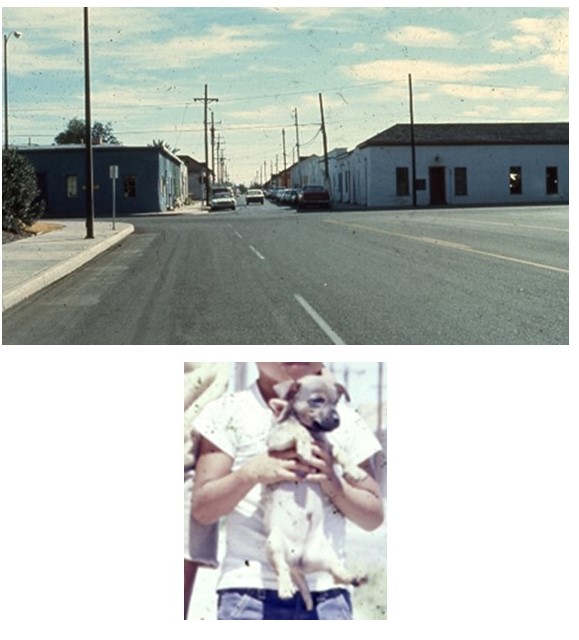
Dripping sweat I sat and beheld a new unknown territory ahead of me, a fascinating view I had never seen before, consisting of a row of adobe houses on both sides of the street, the front doors kissing the sidewalk. A row of old telephone poles. On one side a pleasant shade spilled over the sidewalk, while on the other the punitive sun glare was harsh on my eyes.
Near me I had bright walls painted in bright pastel colors, then fading into duller pastels, and then I could see the colors of exposed adobe browns from peeling plaster, when looking deeper inside, there were visible barricades protecting portions of collapsed front walls spilling adobes on the sidewalk, here and there were a few empty lots with a mound of dirt where a house once stood.
I had a strong urge to move into the shade, when I saw a grandmother and child coming home from school, and with a smile on my face I saw the grandmother with weathered hand wrapped protectively around the little girl’s tender hand. I had to wonder, the young and the old, taking care of each other, or who was taking care of whom? I got up to move out of the way.
They were speaking Spanish and went by as if I were not there, turning the way I was looking and around the next corner. Getting up and slapping the dust and the heat out of the back of my pants, I followed in the same direction, deeper into the Barrio. I felt comfortable, at home, looking for a place to rent.
The thought of who was taking care of whom came back to me a few years later when I was fighting the City, struggling over what Thomas Jefferson thought he was predicting two hundred years before when he said, “I predict future happiness for Americans, if they can prevent the government from wasting the labors of the people under the pretense of taking care of them.”