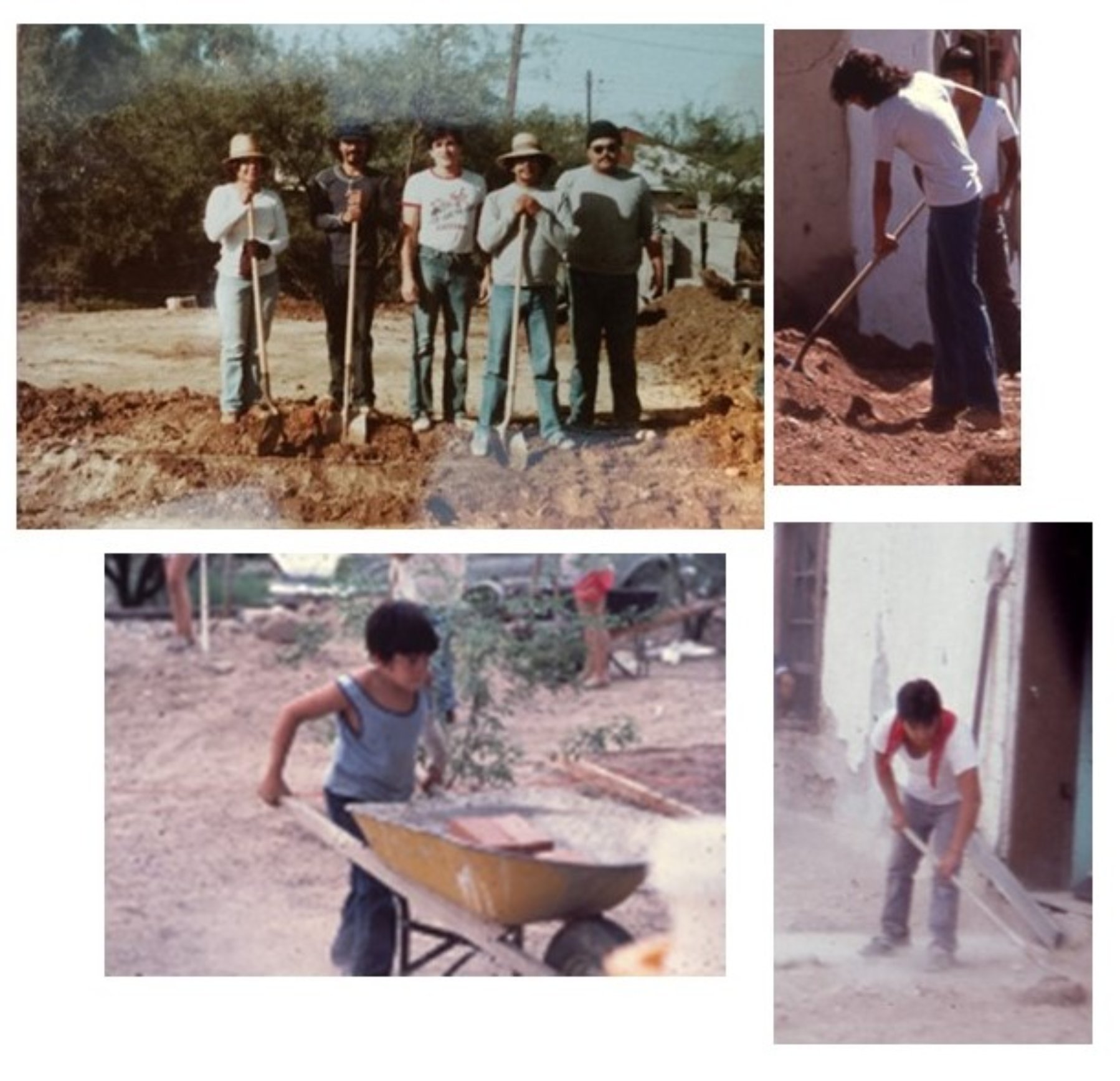
Weakness as Strength
When I went to school, there was a faulty way of studying archeology, and as an extension, the History of Architecture. Too much emphasis was given to the monuments, palaces, and temples, but not much to the average household. Big mansions survive longer, but cultures consist of more than the wealthy. That is changing.
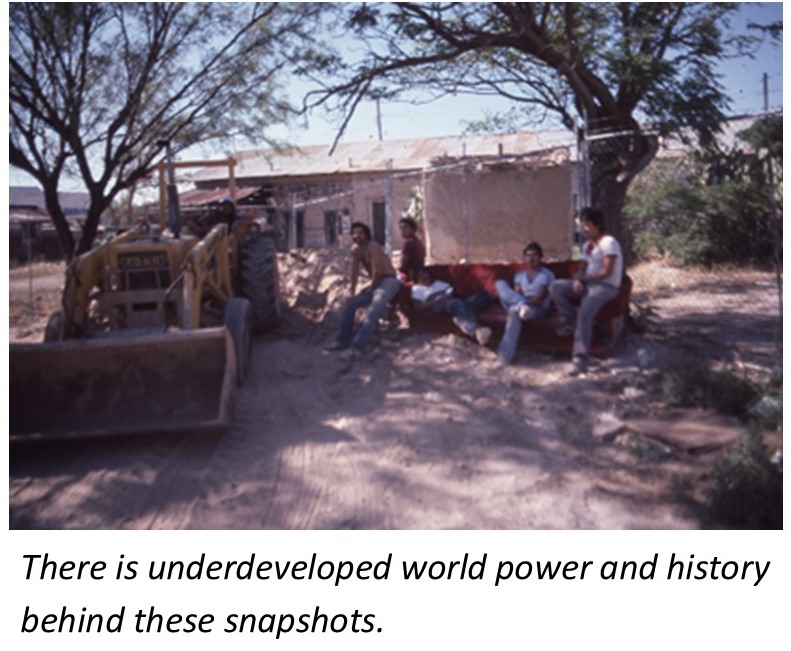
If one’s habitat influences one’s thinking, one’s behavior, and one’s relationships with others, then what can we learn from the fact that we have an entire two-hundred-year-old neighborhood with well-defined boundaries nurturing individuals who represent a culture?
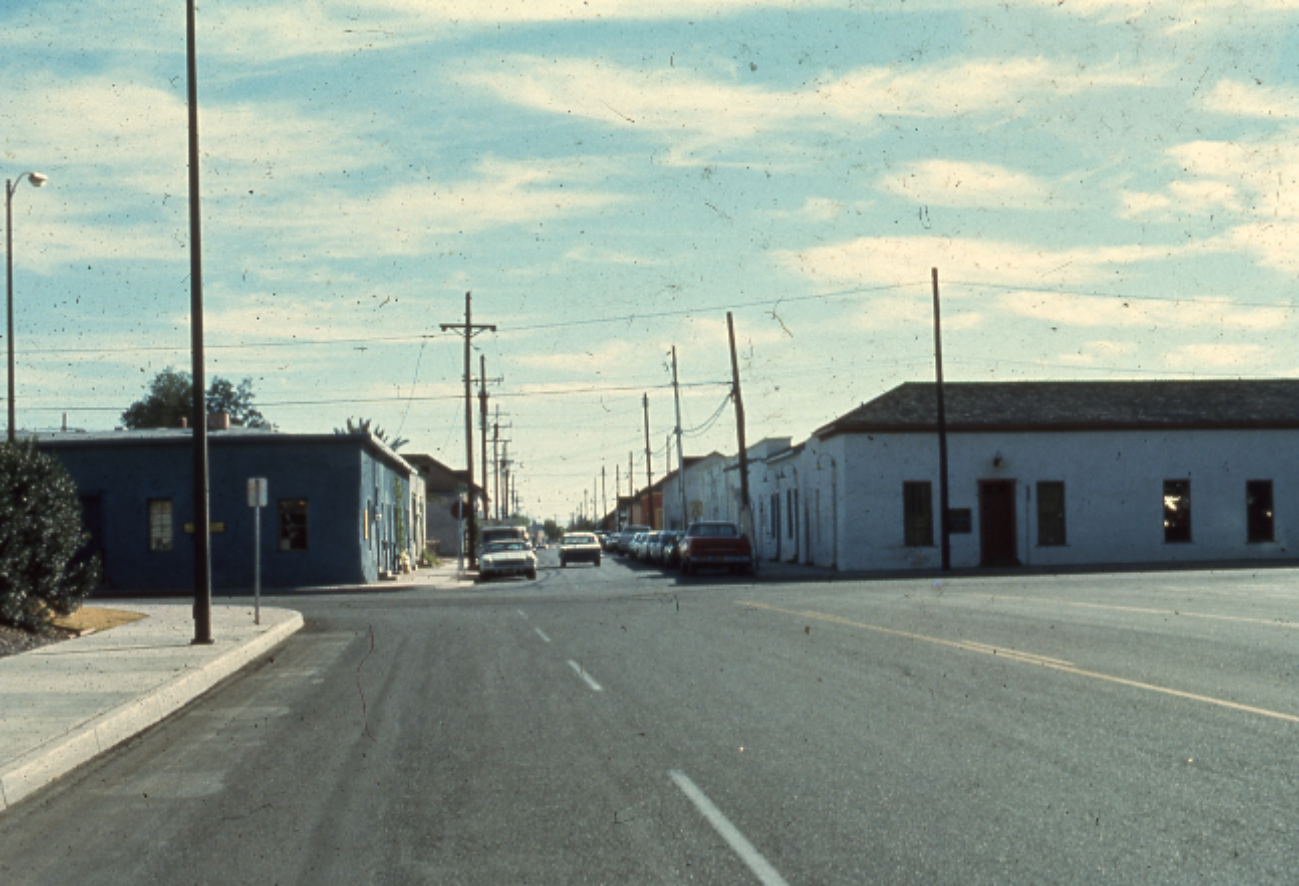 If you miss the real source, the wrong question will lead to the wrong path.
And you may never know it, but it is helpful to find basic common denominator before engaging in any serious action. I had made some preliminary decisions when we drew up the bylaws for the TBA. So, I walked through the streets of the Barrio repeatedly to see new stuff in what was there, and not what my bias made me see. Just as with newspapers, it is most important to know what is not said, the half-truths, the lying by omission, so it is with the environment. It is most important to know that which you do not see. It took me a long time to see it, or to feel it, that something of significance, and to eliminate my pre-conceived biases, for new conclusions.
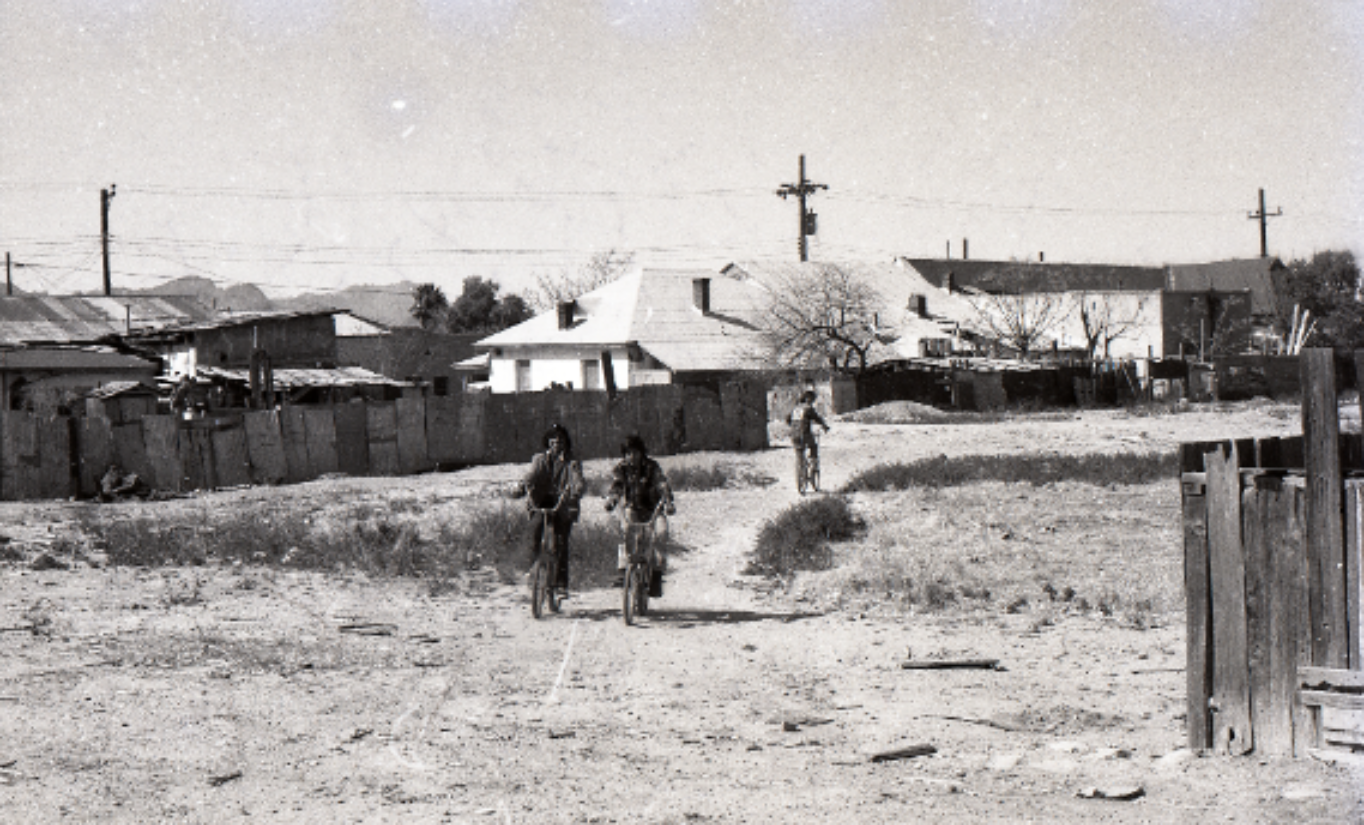 Three basics: 1) The spaces between the buildings, 2) adobe, 3) and family.
Could distances between families, especially children, and the properties of the adobe material, perhaps be more important than the floorplan of the buildings that everybody looks at, and could I still be missing something more, such as significant empty spaces?
I began to put those elements together forming a common thread: spaces, families, adobe. It was evident that the most obvious visual common denominator in this Barrio was adobe. Adobe is a hand labor intensive, family supported building material. When you are inside an adobe building, there is warmth in winter and coolness in summer, no matter how harsh the climate is outside, and there is a feeling of belonging that influences how a family feels and relates to others. However, much time is also spent outside, lots of cooking and socializing.
The Hispanic culture is centered on the strong bond of the extended family, the enjoyment of life today rather than tomorrow. Earthy adobe is complementary to that by its sedentary nature. Moreover, there is a broken sense of equilibrium when what was an advantage becomes a disadvantage, when strengths become weaknesses.
Bear with me for a second; we are dealing with three design factors in the proper mix. “Space”, “Family”, “Adobe”. The least important overall is “adobe”, but in this Barrio, it is or may become of major significance. Not the floor plan, but the adobe, or is it both?
I have mentioned before that for a culture to survive within the American culture, it must be able to fight on equal ground on 1) economy, 2) legality, and 3) technology. How can we then turn weaknesses into strength if not by identifying the strengths that are becoming weaknesses, and then reversing the process back to strength?[xlv]
The strength of adobe construction, modern and traditional, is based on its technological and environmental advantages, if we can deal with the restrictive floor plans of buildings made in the past. We’ll see more on this along the way.
The strength of the extended family becomes a heavy weight in an economy where the better jobs, often demand individuals to be free to move great distances. The Hispanic man will tend to let a good economic opportunity go by to stay with all his family. The American Anglo, and now the American in general, will follow the job, keep his immediate family small, and get rid of the burden of the extended family. I am not judging either based on value, only identifying the differences. The TBA was combining the two by using the economy, a job, to bring young people back to the Barrio and their family origins.
Also, a smaller family is economically more sustainable in today’s world, where we educate children rather than need them to help with the farm or income producing work. An educated child turns into a more productive adult. This phenomenon diminishes a particular human cultural value of large families but increases the economic outreach power of the country and by extension, it is exported to other countries. A culture based on large number of children seems to be at a disadvantage. However, we must equate family and culture, not on the size, but with family values, traditions, love, and the extended family.
Despite my love for family values, I have grown to understand that one of the most severe crises we face today, affecting large pockets of poverty, is the population explosion. Since economically advanced cultures have fewer children per family, as a by-product of their improved economy and education, it is the economically disadvantaged countries that increasingly grow, expand, and breed more poverty. Poverty breeds poverty. I am NOT promoting abortion. In the Hispanic culture, abortion is murder and contradictory to family values.
It is a misconception that the wealthy create the poor. It is the poor who create more poor people. Logically, you work for he who has the money to pay you. Blaming the rich for the existence of poor is the argument of socialism and communism. They are dead-end philosophies. Poverty breeds poverty, for the poor has nowhere to go but up. It is no coincidence that socialists and communists know that and use it to their advantage, keeping poor people poor. When you see nation’s leaders making mistakes causing an economic crisis, it is not always a mistake. Often it is done on purpose, as is the case here in the United States.
The distinction between ‘creation’ of wealth and ‘redistribution’ of wealth is obvious. The pretended need for centralized “redistribution” of wealth from rich families and rich countries to sustain the increasing poor population and countries (poverty breeds poverty) is a destructive form of perpetuating and increasing poverty worldwide. This attempt is cruel and usual punishment, unfortunately. The only real beneficiaries are those doing the planning, the “transferring” and whose livelihood is based on the existence of poverty. They are self-serving part of the corruption that claims to fight poverty and instead adds to it.
Instead, intelligent use of money, to make more money, is based on an expanding free market, which creates new businesses and jobs. The Trickle-Up Theory is the only way to eradicate poverty worldwide
If countries with good economy and a decreasing population, keep feeding countries with poor economy and an increasing overpopulation, the result is to increase the number of poor.
Redistribution of wealth is a criminal form of perpetuating poverty!
Share the power, the knowledge, to make money. But the real key is not so much to make money; it is to produce. Only savvy people understand that. Making money by producing. By making money, I mean doing your part in producing what it takes to keep yourself and those for whom you are responsible for alive, sheltered, clothed, free, and educated enough to be happy and not hungry nor dependent. If you can produce the income level to have a large family, go ahead! Produce to afford your need for space.
The Barrio is a micro sample of a whole country. The same principles apply, and we didn’t want to fix people’s houses for them while keeping them poor. That is what the City does.
Fortunately, this Barrio in Tucson is traditional in the US, meaning that families here have been in the United States for generations. These communities are very different from places where you have immigrants who recently come from Mexico or countries further south in Latin America to work. They try to stay here for a while, but still send most of their earnings back to their home, so that even if they have left their families, they still intend to support them.
One American dollar goes a long way in Mexico and in other Latin American countries. As a result, money made in the United States is helping tremendously to support and improve lifestyles in other countries. This is good and bad. Bad because those dollars earned here and sent elsewhere are not circulating within the United States anymore. In the long run, it is a good thing, because if at least half of that money, filtering into other countries, is spend and invested by relatives to improve health, send children to schools, and become small business entrepreneurs in those countries - not by the other half of lazy family members or leaches who squander it - and begins to circulate there and used for businesses, health, education, and to create wholesome wealth. It will trickle up. It will raise the standard of living there to the point where small operators begin to do business with their neighbors. Then with neighboring countries and finally with the United States, so the entire international market benefits. This is one of the major ways in which the United States with its free-market economy is both directly and indirectly helping to raise other countries out of poverty. The Trickle-Up Theory works, starting from the very poor moving up, thanks in part to the United States.
I am not talking about ‘foreign aid’, which is an altogether different issue and not related to the Barrio. Foreign aid needs to have measurable mileposts based on results, otherwise the money goes to both; foreign corrupted individuals and to local corrupted politicians who promote more of it because they receive kickbacks.
Unfortunately, as I so clearly saw when I went for food stamps, and talking at Jerry Lee Ho Market, we begin to experience a change in the quality of immigration. Before, most poor immigrants came to the United States to improve. It was a booster for them and for our economy. Now we see a new wave coming to the United States because they hear there is free stuff once they get here, called welfare. This will nullify the value we used to give immigration. Furthermore, the welfare syndrome makes it easier for the coyotes to get paying customers. In addition, those making money out of selling body parts promote children’s movement towards the border crossing for easy picking.
How can we prevent that?
Poverty in Honduras is very different than poverty in North America. A poor family in Honduras sleeps on a dirt floor. So did 90% of the American Indians. The newly arrived Hondurans to the United States send much of the money they get back to Honduras. It is very tempting to see the value of individually redistributing some of American wealth in this fashion, and I am not against it. But it would be more beneficial for all to help clean up their corruption and energize their economy, not to mention the detail on how there are thousands who die on the way, killed for the profit of others as sex slaves and body parts, and don’t forget that there are local officials in the Unites States who also make pay-off money in this farce. Sometimes you wonder why there are some Democrats, and attorneys, so excited about open borders. There is a lot of money to be made.
At this time, the adult American poor makes $20,000 per year and consists of less than 20% of the United States population, compared to $500 per year elsewhere by more than 60% of the world population. The obvious answer is rather than giving our money to them, it is to teach them to do what we have done. Corruption and redistribution (no difference) keeps development and progress from happening. People promoting illegal immigration are like offensive criminals. Hard core criminals.
Doing my own research a few years ago I have found that in the entire world, of the fifty cities with more violent crime five are in the United States. Intrigued by it, I looked into it further and found that all five of them have had a Democrat controlled government for the last thirty years or more. Is this cause and effect? When we also see that most of the killings is done by on each other, in those same cities, you can’t help but wonder if liberal permissiveness, more promises, and more money brings positive results, or if government intrusions and programs are counterproductive? Where is all that money really going to? Detroit, Chicago, Saint Louis, Baltimore and others lead the way in statistics of criminal activities. Is there a correlation here between more crime, more money, and more Democrats? We lose more lives per year in them due to murder than in any recent war. And induced abortion is reducing the population inside our country, making immigration more necessary. Killing our own to let more in. I would like to raise the question if some of our political and bureaucratic leadership are promoting failing policies, and the question as to why. In the meantime. How do we turn weakness into strength?
It gets worse. Whereas countries in Latin America were sending their best workers here to send most of their money back home, now they are beginning to send away their useless, most lazy workers to collect welfare here with no effort and send most of it back home, milking us and keeping their good workers at home. They have learned to turn our weakness into their strength. What about the Barrio? How does this apply here?
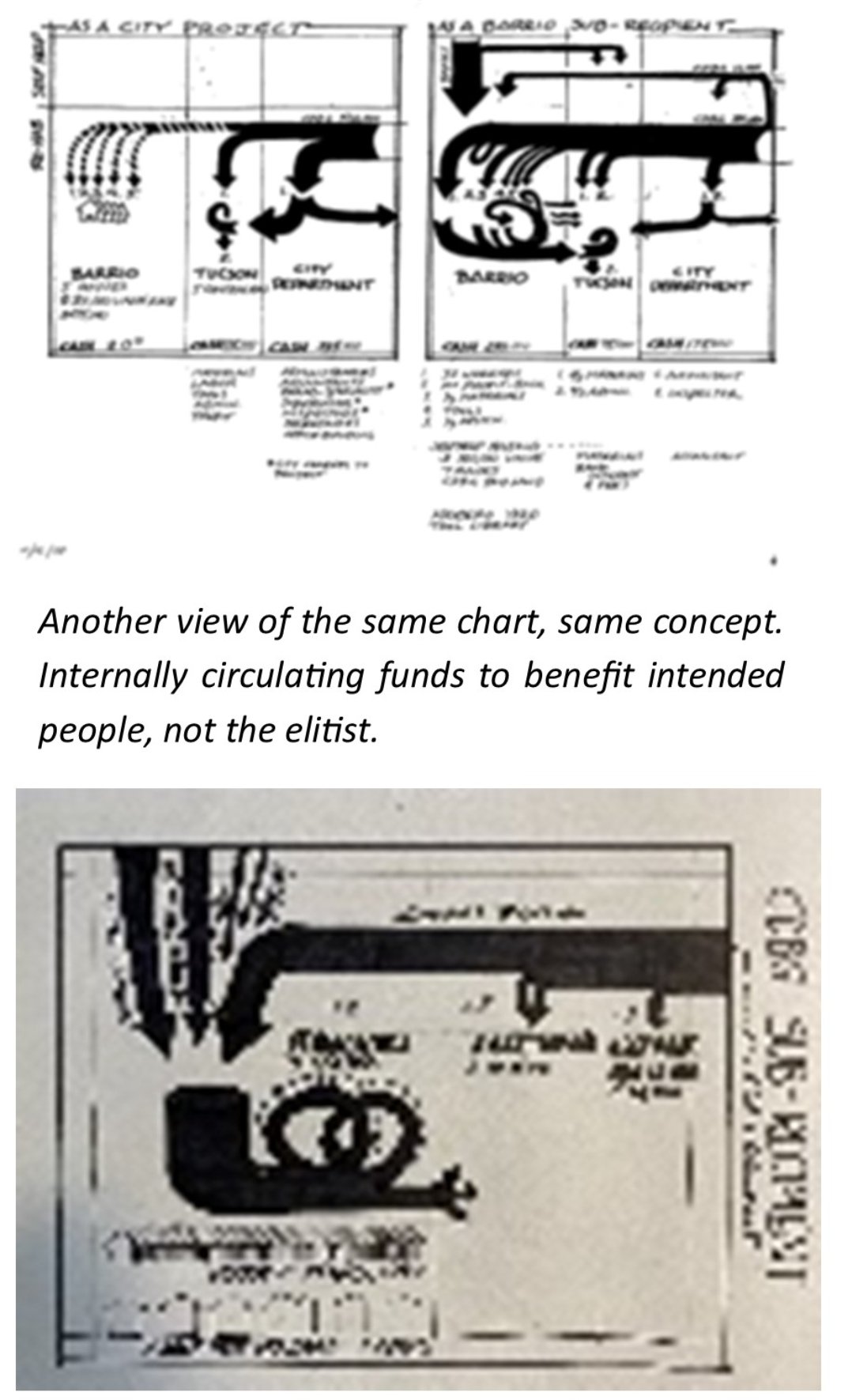
A similar graph, explaining why the CDBG money coming from the Federal Government stayed in the Barrio and benefited the Barrio. Not as ‘foreign aid’ or handout, but as earned money. The money circulated in the community and benefited the community first, before heading elsewhere. The Republicans understood but didn’t seem to care. They just wanted it to come to Tucson. Let the free market take care of it afterwards. I chastise Republicans big time for being indifferent to social-cultural details, as I chastise Democrats for taking advantage of it,
Only afterwards Republicans realized the positive impact money had first in the Barrio, then outside. The reverse is with the money immigrants send back home, which helps the overall world economy including ours, but maybe not so much our local economy. Tough choice.
The Democrat leaders wanted that money to go to where they could get more votes. They did not understand, or cared, for the dynamics of the economy. Therefore, for different reasons neither party really cared about what I am saying here. They didn’t care how to benefit the Barrio until the results began to show. Fortunately for our cause, this Barrio was traditional, so the wages were not syphoned out to Mexico. Again, I am not against benefiting other nations as well, but right now I was fighting for the Barrio, not for Latin America, or the world in general. In the new 14 Rules for Freedom we have; Rule #4. ‘Clean your house first, then demand everyone strive for higher standards.’ We were doing that, cleaning and moving in the right direction.