Birth of the Tucson Barrio Association
The transition from being reactive to proactive in all of your agendas is imperative to effect positive change. But above all, it is more imperative to not hording collective power, but to use the widespread sharing of individual power at all levels. Only thus can organizing be true, effective, and constructive
After that meeting, several people came to me and suggested the idea of starting a neighborhood association. I had no interest. I was working my ass off at a construction site, learning real work, not drafting lines on paper without knowing how they are nailed together as most architectural students do. I was eating well and drinking beer every night at Cushing Street Bar. Life was good. I was even looking for a normal room to rent in a normal house with a normal bed and bathroom in it. A new friend Rocky Bauer, a wonderful person whom I met when he was a consultant to the Tucson Design Center, was having a beer with me one night.
“Do you know what a nonprofit organization is all about?” he asked me.
“Yes, I started one while I was in college. You work and work and work and there is no profit.”
He smiled.
“How would you recommend to the people in this Barrio that they form a nonprofit to help them organize and protect their homes?”
“Not interested. Others have asked the same. I don’t know the legal procedures and documents.’
“But I do,” he countered, “And you know the neighborhood.”
“No, I don’t. Not really and I don’t own property.”
“If you wanted to protect the residents of this barrio from displacement…,” he proceeded trying another approach.
“I don’t.
“… from outsiders taking over their homes from decisions being made without their participation, from politicians promising one thing and doing another, how would you do it?”
“Rocky, you are talking about me. I am that outsider moving in and taking over….”
I had seen displacement and gentrification elsewhere, a sad thing to witness, but most of the time inevitable part of world history. It happens to others. I was now part of causing it.
I went on. “Why would I want to protect anyone? I am not even that good at protecting myself.”
But it was a challenge! I took a paper napkin, a ball point pen, and drew a map of the neighborhood, then wrote some numbers.
“This is what you have to look at.” I told him.
I was hooked!
Hint: If you ever see an architect drawing on a piece of paper about something you just spoke about, you have him by the balls, though it may be different for female architects.
Rocky was not a VISTA volunteer, but he was truly what a VISTA volunteer should be. I had found someone who was willing to do the thinking and acting at the same time, and I kind of liked the way he thought, most of the time. I looked at it from an architectural and psychological point of view, the Physical environment and the Mental disposition, combining to form a defensive-offensive approach to forming a group that could withstand outside forces. Able to self-control, both mentally and physically their future. The part that I had not defined yet was if by “mental” I meant “emotional” or “intellectual”? Big difference. And in the intellectual, there is also a difference between intelligence and wisdom. If Rocky had not talked to me that day, this book would be different.
“Who is here now?” I asked.
“Mostly Mexicans, several Anglos, some Germans, some Asians, a few Blacks, you name it. They all needed to be accepted. The future should belong to the people who worked hard for it. So how about leveling the playing field?”
Rocky looked at it from a legal standpoint and I from the logical perspective in which a document can be a protection from outside forces. Unconsciously, he used the emotional approach to show that the intellectual had the better answer. I fought that tooth and nail. Intellectual dominance as protection from the emotional, when both should have equal part to achieve common sense, or wisdom. When people argue, and some use emotions, while others an intellectual foundation, they seldom truly understand or agree with each other; they lack wisdom which contains both. How do you overcome that?
The result was an Article of Incorporation, followed by bylaws protecting the residents living there at the time. I turned numbers on a napkin into sentences:
The neighborhood was divided in three: 1) Barrio Libre, 2) el Hoyo, and 3) el Membrillo. All three formed Barrio Viejo, or Barrio Histórico. We set it up so that you had to live in the Barrio to be a voting member of what we called the Tucson Barrio Association (TBA). Barrio Libre was largest, with 158 homes (55 %). You had to live there to nominate or be nominated to represent that area, then all members voted for seven from those nominated. El Hoyo had 96 homes (35%) out of those nominated by its residents, five would be elected. For El Membrillo of 26 homes (10%), same process, three would be elected. Then one position for “City at Large” nominated by Barrio residents only and elected by all residents. Total of sixteen Board Members.
One Barrio, three sections. The chairperson only voted to break a tie. Elections thereafter were staggered over three years. The significance of these details is that even if the section of Barrio Libre became totally gentrified, which would be difficult but possible, electing all seven new residents, the sum of the other two Barrios would still constitute the majority. It would take a lot of widespread gentrifications to be able to tip the scale. In this Barrio, the so-called minority was the majority for a long time, in truth and in paper. That is the power of the law. But the most commanding minority and majority was newcomers and old timers, for backgrounds and cultures in the Board was and ought to be mixed. However, newcomers didn’t see it that way. As newcomers, they didn’t feel the effects of displacement. Thus, they didn’t realize the distortion of their criticism.
From a napkin, Rocky created as a legal document, the Tucson Barrio Association, or TBA. With a third person from the Barrio, Carmen Valenzuela, we incorporated the organization legally and paid the fees.
Rocky, Carmen, and I called for a meeting of the Barrio and while two of us were not originally from here, we passed out flyers and talked with everyone. We got some of the most respected residents to encourage others and for some reason or another, many people showed up. If you think that is easy, call for a neighborhood meeting for the first time and see how many people show up. But they came, many of them.
Señor Rosendo Perez and his family, much respected in the Barrio, gave their full support. Others from outside the Barrio came as well, such as Dr. Trejo, a professor at the university.
I won’t attempt to explain what happened afterward or why it happened at all. All I know is that Rocky knew a heck of a lot more than I did, or someone else knew a heck of a lot more than either of us knew. Looking back, how did we know that the most dilapidated neighborhood in Tucson could become the most stable? Did I believe that myself then? It depends on how you define “stability.” The thing is that this neighborhood had to have many good things going for it below the surface, things I knew nothing about. And yet, I knew that sometimes what seems to be your weakest point happens to be your strongest one. Could Jerry, Jose, and friends ever build things up? At that moment, to me, it did not seem so. I was wrong! What about Jose and Charlene? This question remained significant, and things do change in life.

At the meeting, I saw many of the parents present at my showing of the Super 8 film, at the City meeting, and many whom I had never seen before. I conducted the meeting in English and Spanish, as Rocky didn’t speak Spanish. I explained why and how we were doing this, and how the bylaws would structure the neighborhood organization, and why it would give us a voice in the City Council, as if half of the people there knew or cared what the City Council was.
Another professor, maybe Charles Albanese, familiar with the Barrio, and respected by everyone, spoke in favor of forming the association and said that the structure was valid and very favorable to all present. That was all it took. The level of understanding and energy were very diverse, but the group had a unified movement. How come? What was it?
Credit goes to Dr. Trejo and others who had been influential in 1971 in getting the local shrine called El Tiradito to be entered into the National Register of Historic Places. The City, county or state, could not build a freeway through that spot or they would risk losing all federal funding. Results come from previous actions and the good use of laws by many other people. Not by me. My presence was in fact accidental, and it was even suspect that I was not doing things for myself, as will be seen later, a big difference.
Also, around that time Professor Sobins and Professor Giebner and several students from the University of Arizona, had written the academic booklet Barrio Historico Tucson, which detailed the efforts of many people before us who had done deep rooted work on behalf of the area. More people were involved, like Dr. Arnolfo Trejo, Mrs. Anne Laos, Albanese and others. The study had great value, but, however sensitive it was, I think it lacked the essence and expression of the vernacular, the local expertise, from people like Carmen Valenzuelas, Panchita Lopez, the Sr. Perez, Bertha Santa Cruz, and others such as, Bobby Galvez, Larry Lucero, etc.
It missed the portal connecting the cultural divides, the intuitive cultural recognition, the applied non-verbal clues, the spirit, the soul-searching of cultural identity.
I take the time here to give color to a few details of what went on, because each detail will sooner or later represent a significant piece in the overall puzzle.
I gave no opinions. Rocky and I answered many factual questions at that meeting, and I translated important themes and details into Spanish to make sure everybody understood them. Among families who grew together through generations, no one asked about the unknown elephant in the room, who the hell was I? I guess they didn’t want to look at a gift horse in the mouth.
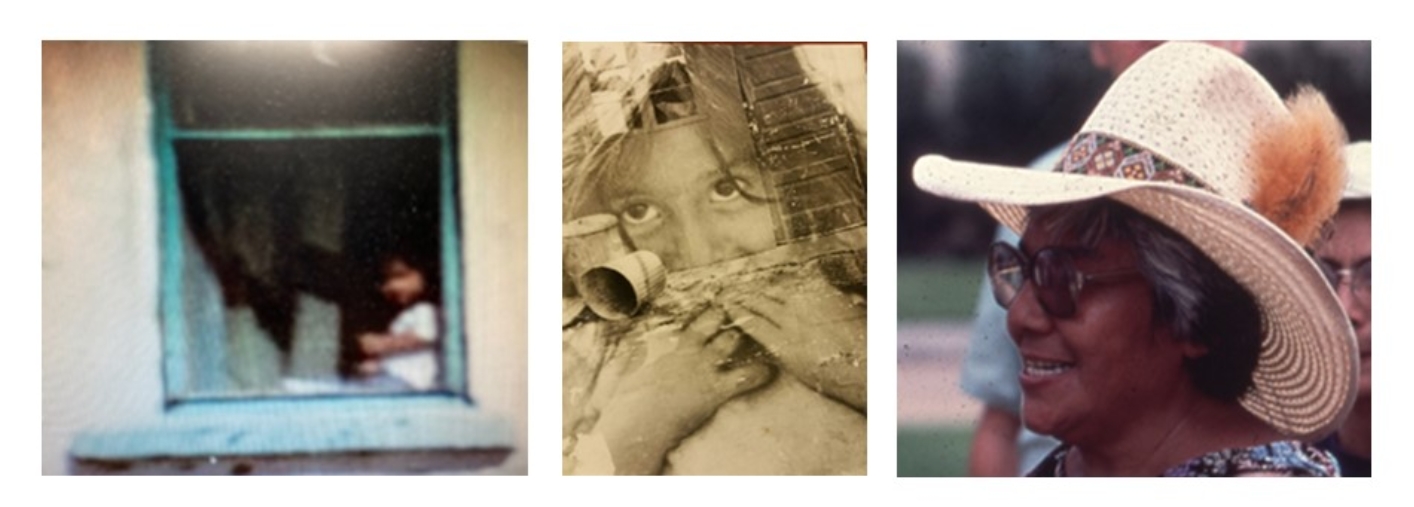
Nominations and elections took place of people I knew nothing about, but they did. The Chairperson, Bertha Santa Cruz, a teacher and grandmother living in El Membrillo, was elected that day. Carmen Valenzuela, who couldn’t read, was elected as Vice Chair for her tenacious spirit. I sensed in everyone present a wave of relief and contentment based on their accomplishment. The Tucson Barrio Association was born. Papers were registered and a copy was submitted to the City and to the State. It would still be sometime before we got certified as a 501I(3), but we were now a legal, functional entity.
 That is as I recall it. I am sure others will remember different details, maybe different actors in the play. Other than devising an effective set of bylaws, I am sure it all succeeded due to the influence of individuals I will never know about, because nothing else makes sense to me as to why it happened the way it did far beyond my influence. The unseen undercurrents in the Barrio had an extensive history. I had none. I hardly knew anyone. I had even told Rocky I hadn’t even wanted to be there.