Carrillo Swimming Pool
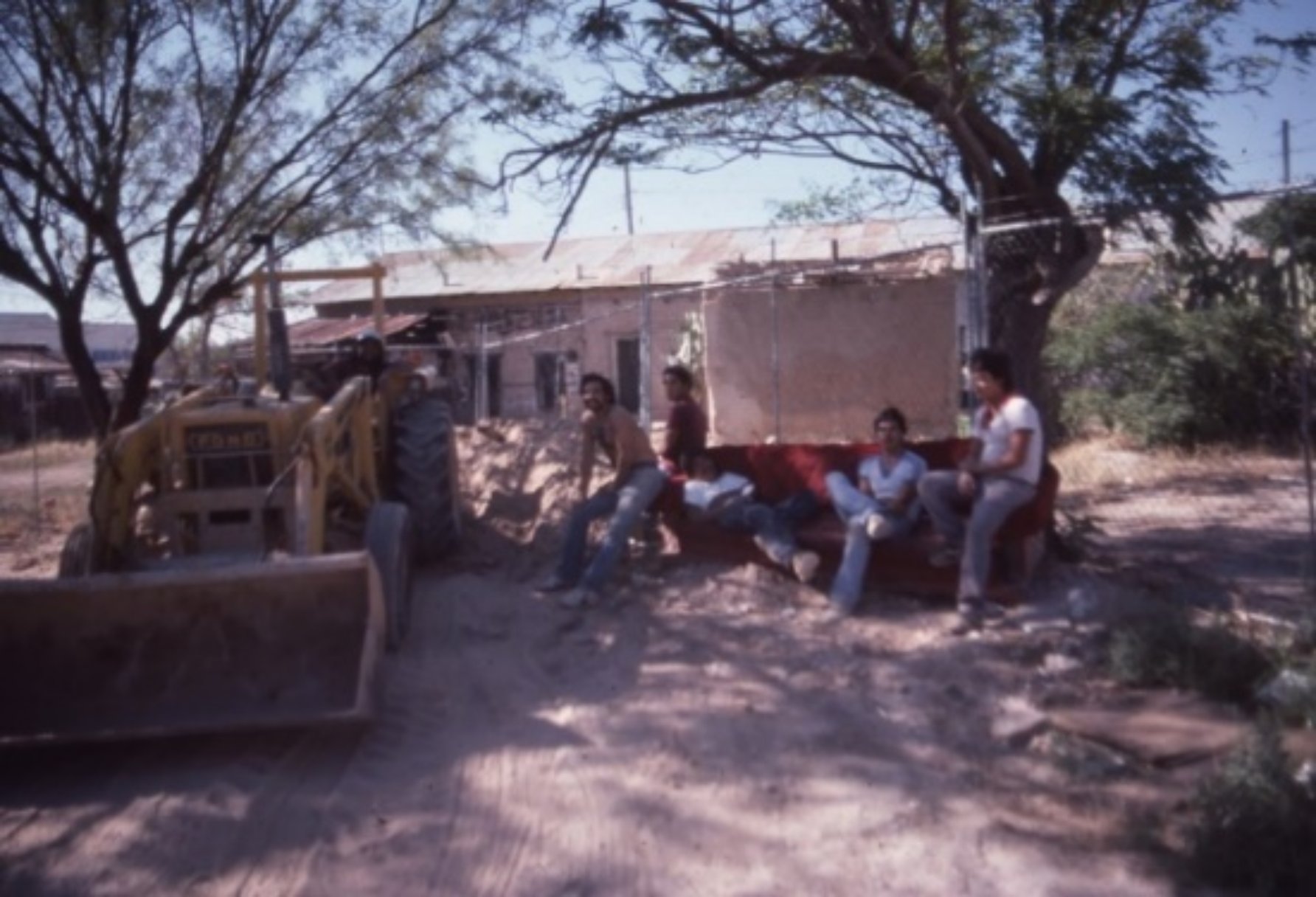
Tension leads to equilibrium. Consensus is the best form of long-term decision-making, even if it is the most difficult and time-consuming process. Then comes voting, one person one vote, not collectivism. Since I found that in a democracy, the majority wins, it is important to respect the minority opinion, dissident voices potentially provide fresh insights to benefit all, but they can also derail the issue. So I looked as well into dictatorships or totalitarian decision-making, by the powerful and the Elite, which may be the most time efficient, but also the worst; too prone to favoritism, promoting incompetence, and prone to controlling the collective through governing, it tends to be riddle with corruption, even if it maybe fast and conclusive. My experience tells me that only in true emergencies should one voice rule, but in solving community problems there’s a different multi-effort approach, and consensus works much better.
“POOL CLOSED,” said the sign. The entry gate was locked. This episode would last about eight months when the local public swimming pool known as Carrillo Swimming Pool, behind the Grade School, was closed. How many poor neighborhoods have experienced this?
“What happened?”
“The City says that there is a leak, and they need to find out where and how bad is it.”
Then they claimed the leak was under the swimming pool and was so severe the water leaking out was eroding soil and affecting surrounding lots, but not to worry because they had just coincidentally in their master plan agreed to close three local swimming pools and consolidate them into one large pool at a location one mile away. This was very depressing news in the one hundred degrees summer heat for kids as well as for the parents. Wholesome activities for juveniles are the best antidote to vandalism and delinquency. The TBA Board got a group together and went to a City Council Meeting to express disagreement with their decision. All they had to do was to repair the pool and reopen it. Local kids had no way to travel a mile away to swim during the hot summer, and they had no money to pay for bus fare and the entry cost of other pools. The City Council responded politely with a nonchalant “too bad”.
This was a battle cry. The TBA[i] called a meeting and the room filled up. Parents, children, and strangers came from all over. I don’t know where the ideas came from or whose they were. I may have said a thing or two, but mostly I just listened, and an immediate course of action evolved.
“If the City won’t fix our swimming pool, we will do the work ourselves.” A few people said. People got excited. We broke into groups. A tentative schedule was drawn up and work was to commence the following weekend, starting with a massive clean-up, a painting party inside and outside. Building a wooden lifeguard tower to replace the existing crippled one, all cracked plaster and cement to be repaired or replaced, and more.
More than a hundred people showed up the following Saturday. Men, women, and children came out. Each brought their own hammers, rakes, paint brushes, and wheelbarrows. One brought a jack hammer. I glanced over the crowd and people from other neighborhoods came to help. Two persons soon stood out increasingly. One of them was Morton, a short, round, middle aged man, with a face full of varicose veins and a pleasant, polite demeanor. Later, I found out he had plans to run for political office. His friend was Willy, of Spanish descent, with his dark hair and mustache. He was a young man who showed interest and desire to help with no apparent alternative motive.
That first weekend was special. We got in each other’s way, but everyone was friendly and positively excited. The City did not take any action to stop us. Remember, the police did not dare to come into this neighborhood and much less with over a hundred people armed with hammers.
It would be hard to tell what a neighborhood group with home tools could accomplish in fixing a swimming pool and restoring a bath house. However, this was not an ordinary neighborhood. This was a Barrio producing generations of workers and skill craftsmen with an extended family network reaching far and wide. The impressive turnout and fast paced accomplishments in the initial stages convinced the City this was a serious effort. I watched with pleasure how children helped their parents and uncles, carrying tools, shoveling dirt, and grandmothers bringing food and water. I realized then that Jerry, José, and the other kids did not help me build anything because I was not family, not because they didn’t know how or want to. I noticed this because in what we sometime consider weaknesses is where there are hidden strengths if we only knew how to look for it. The power of the family and peer pressure have no equal.
Several general incidents are worth re-telling. One day, a sixteen-year-old kid, whom I here will name Paco because I do not remember the name of this talented individual, came to me asking if he could paint a mural on the outside wall of the bath house.
“Of course,” I said, “but you need to plaster the wall first, and that takes skill so it will last. And you need to get the proper paint and mix it well.”
“I know all that,” he looked at me like a grandfather looks at a newborn. He showed me a sketch on a piece of paper.
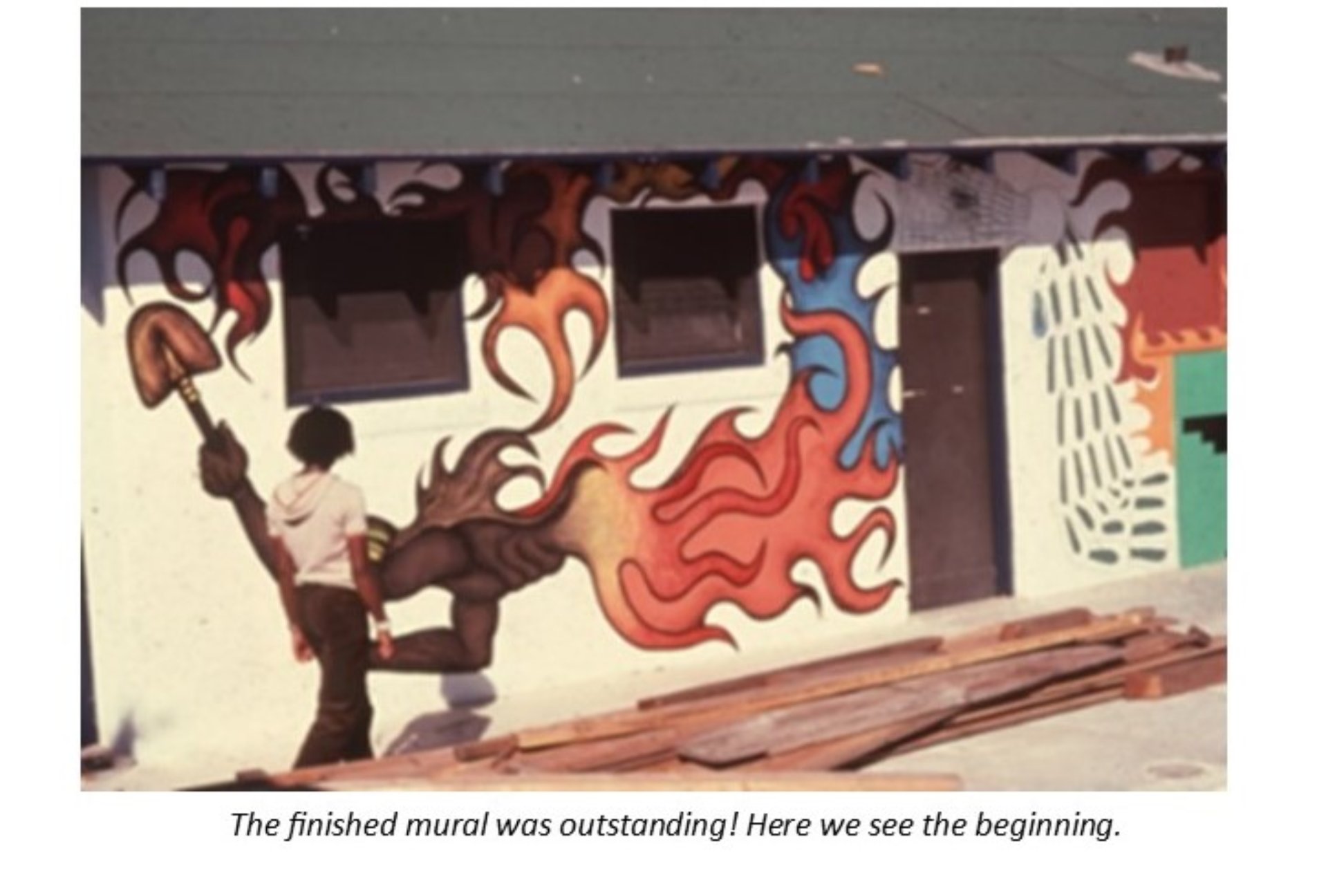 “Great! Do it.” Who the hell was I to tell someone he could paint a mural on public property? I forgot to tell him that we should ask the Board first. The talent from the Barrio would come out of nowhere. You only had to recognize it and give it the chance. Tension also leads to action, an opportunity to expose talent. Consensus is sometimes implied, if you can exclude the intentionally disruptive.