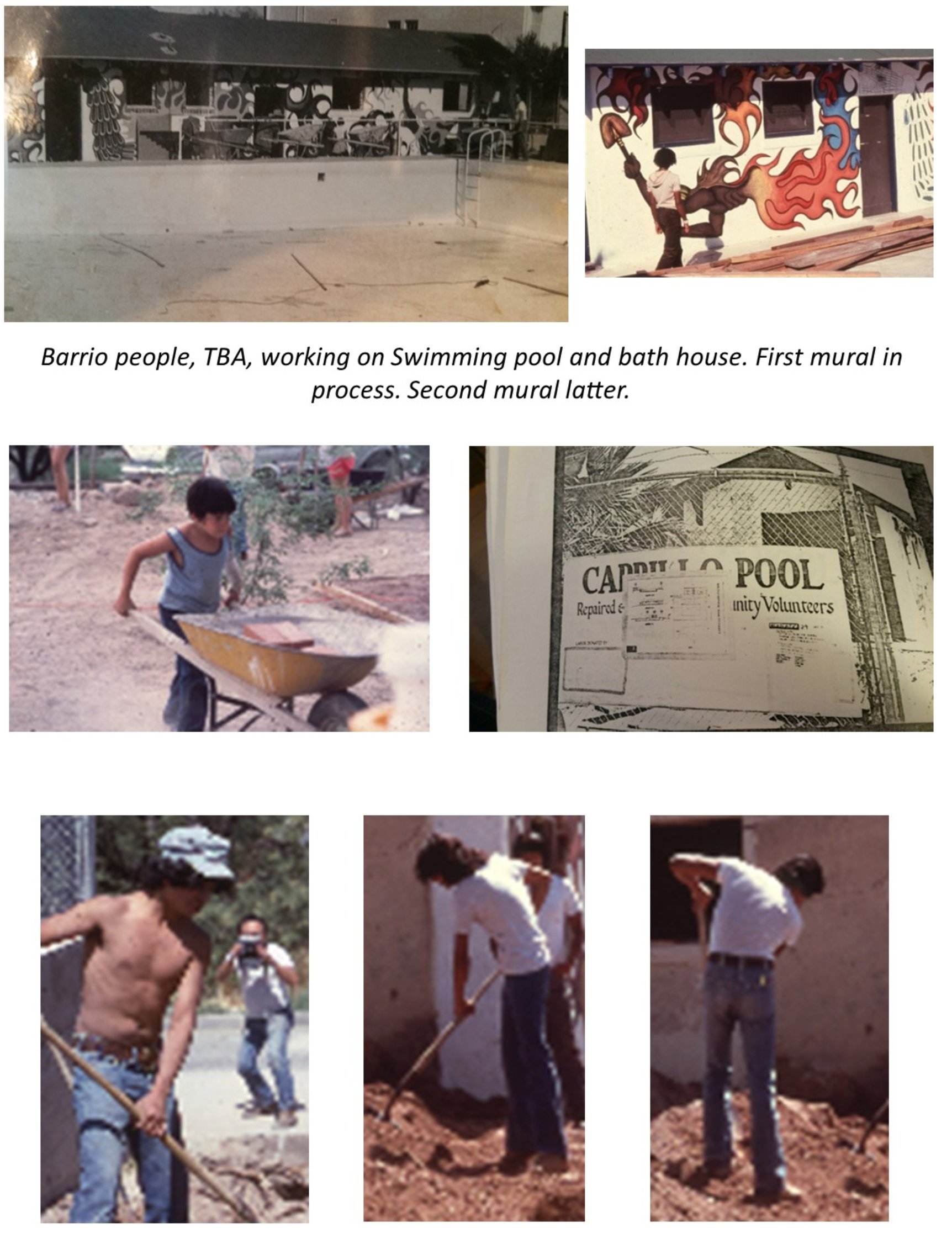
The Enemy?
We were lucky. Fortune smiles on everyone at one time or another. The trick is to make good use of the opportunities when they show up. This comes with a caveat, however.
The newspapers heralded that Tucson had been chosen as the site for the conference of all U.S. mayors in a week, so we came up with a plan.
Whenever I use the word ‘we’, all I mean to say is, that in some way or another, I was involved. It’s hard to tell how much of my involvement was critical or how much of it was casual or superfluous, and it didn’t matter to me, but involved I was. To try to guess is also irrelevant, since as I said before, the fabric of this Barrio, which is the case for most Barrios, is woven with complex, interconnected, meandering threads, and it can be hard to tell when you are not part of it, what is connected to what when one thread pulls, and what other threads respond. I was not connected to any of them. Others made it happen, as they were better connected to the undercurrents shared by all. They were the people who made any actions taken by me turn out with positive results[ii]. It is their Barrio. The one thing I had is an inborne conviction that I am equal, free and had the individual right to choose. So, did they. Here is a power I could share by example.
One thing I do know to my credit is that I actively listen, evaluating multiple ideas, and I help select and polish the best ones no matter who makes them. Then I motivate others to put them into action. At times, I may be the only one pushing one idea, but most of the time I simply go along with whatever is best, whether it was mine or not. The other side of the coin is that I do stop bad ideas that are unjust, stupid, cruel, self-serving, or ideas proposed by the wrong people, such as using favoritism, undermining productiveness, or in any way harmful to others. Undermining the enemy also means recognizing that the enemy of your enemy is not necessarily your friend. It’s surprising how much self-serving takes place among the so-called ‘do-gooders’. Here I take the liberty to hold a few concepts, for they will become the foundation of what is to follow.
There is much to say about identifying a real enemy. Developing a common enemy can unite bickering groups, but that is not as simple as it appears. Motivation is a curious thing; it must be channeled correctly. Beware of devious people promoting mob reaction by creating false enemies[iii]. Be attentive of including awareness of the enemy from within, including yourself, which is the insidious power of sublimation of goals, in which people easily affected by a sense of power end up believing that because something is good for them, it must be good for the group and they act accordingly. This leads to the unwritten agenda which is difficult to detect but is a major cause for derailment. I am constantly looking for these agendas, and I am constantly aware that I am as susceptible to them as everyone else. As part of growth, the key to temptations and trials and tribulations is how we ultimately respond, and how, including how soon, we overcome flaws in ourselves, to make us better people and lead ourselves to be the men and women we are constantly becoming. Democrats and Republicans alike often confuse the concept of what is good for the country with what is good for them or their party.
The TBA did create a mob reaction but not riots, both easy to do and misuse. Riots are often the result of hidden agendas, not the professed ones. The motivation of the media is promoting whatever sells, or worse, rather than providing factual information that may lead to reaching solutions.
Once we were successful at attracting attention, we had to be guarded against groups who wanted to use our methods for their own purposes, while pretending to be in our corner. If this sounds enigmatic, it will become clearer as the events develop. Detecting others who try to misuse your efforts is like detecting cancer, difficult, insidious, hidden, and growing[iv].
“Who is or what is our enemy?” Ray asked rhetorically, a conversation that repeated itself. “Bureaucracy? The system? Corrupt politicians? Prejudice? Rich people? The City?”
“No.” I countered every time, “those are only symptoms.” I had not found acceptable answer to such an important question. I was just beginning to give serious thought to causing change in people. I was aware of the two kinds of enemies: the internal and the external, but it is easier to be concerned with identifying and overcoming the external ones. Although the enemy from within is more dangerous, I didn’t know it yet, how dangerous it is.
Tantalizingly, I began to formulate an elusive thought: “Is the enemy in the forces that prevent equality?” I had some problems with the word equality.
“Often we find that the enemy is within ourselves.” Ray offered.
I ignored him. I thought I knew that.
“Be more specific. What type of equality?” He kept fettering.
“Equality in freedom, or equity. To be equally free.”
“Baloney! If you are hungry, how can you be equally free?”
As I had noticed earlier with Sofia, when someone wears out their mental energy just meeting daily needs, is there any energy left to change their situation? Hunger does not lead to freedom!
Suddenly, Ray had opened a window showing me a perspective I had not seen before. I had been told that despots thrive when their subjects are hungry. Almost all controlling dictatorial and communist countries to my knowledge are based on the masses kept hungry. The hunger is not accidental, for hunger does not lead to fighting for freedom. It leads to insecurity and apprehension about the next meal. So, is being equally hungry a way to be free? Will inequality or low level equality lead to easier control or does it make it more difficult? This causes the attempt by dictators to destroy, not to build, the country’s economy, and to get rid of the middle class. They want businesses to fail, so they instead can gain control.
Consider this carefully: Communism promotes as a crisis the belief in inequality between the have and the have-not, so then they can step in and make a demand for equality, so they can perceive or deceive everyone equally. However, some socialist countries are not necessarily hungry, although some are reverting to capitalism now, because socialism didn’t work for them as they were promised. In socialism you relinquish substantial personal and economic freedom for equality. What exactly is their concept of equality?
The meaning of the word Equality is different in a democracy from that of socialism. In a democracy, equality is symbolic and equal right to freedom or liberty with equal rights to happiness, not with equal happiness. Note the difference! Democracy doesn’t promise happiness, only the right to it. Socialism promises equal happiness, but contrarily, in socialism equality is a preventive term, as it leads everyone to equal treatment and equal results, or equal terms, or equal joys, and therefore equal misery as well. It requires overpowering to promote equal results on people, for it is not intuitively. You need someone, the estate, to determine what is equal for everyone else. The hope is that the estate reaches a just degree of imposed equality. Happiness by equal mandate. To reach that goal, it is irrelevant to them wherever everyone reaches 95% happiness or only 5% happiness, provided it is all equal.
“Let me give that some more thought,” I interjected. “If you are free, it doesn’t make you equal to others who are not free, but you can be equally free in concept. If you can maintain conceptional equality, then you remain free.”
“And if you cannot?” Ray challenged me.
I was concerned. Are groups fighting for equality or for equity?
“Who determines what is equality? You? Or do others do it for you?” I didn’t wait for an answer. “Bear with me. To be equal to others, you must be as mentally free as they are, until then, you cannot be equal to them.”
FREEDOM: That begged some thinking. Is mental freedom a necessity for equality? Who’s responsibility is that? Who primes others towards been mentally free? The self? Parents? Culture? Professors? Prison Guards? Leaders? Preachers? Organizers? You? Me? I was toying with the idea of sharing the power - to be free, mentally and/or physically.
“There is internal and external freedom. When in prison for the wrong reason, you are not externally physically free, even if physically restrained equal to those around you. But one thing is to be free, and another is to internally feel free or be mentally free.” I took my time to continue. “If you are in a social group, and your group does not feel they are treated equally, then your group is not as free as those treating you as different. Peer pressure is a powerful thing.”
I was beginning to grapple with the confusion of the word equality. “Nothing in nature is equal, only approximations, as with snowflakes. No two people are equal, not even twins. The word equality is a very powerful but only “symbolic” word, provided everybody agrees on the symbolism used contextually. Change the symbolism and you change the meaning. And equality is only in a moment in time, for movement creates differences. The different word of “equity” comes to mind, but equity does not mean ending equally, the opposite…” I paused momentarily to allow him to follow me. “To overcome that sense of group inequality, the only way for you is to leave that group and establish your own sense of freedom and equality. Symbolically only. For freedom is based on being different and being okay with that, not the same. One freedom you have is internal, because it was given to you by your creator, not by another man, and once you internally feel free, you are free. You, and only you, can personalize internal freedom. Then, and only then, can you join your group again, if you so desire. At that point, if the group is being manipulated, you will not be susceptible to it, since you are free to choose. Of course, if the group is not truly free, the group is not going to let you re-join them, because the strength of the group has been based on keeping you and others down. Once the critical mass of members reaches personal independence, or ‘freedom’, then the direction of the group shifts from victims to doers. They now consist of people who are mentally equal to those outside of the group, equal to the rest of humanity, with a strength in purpose and goals based on free choice.”
My elusive thought was calling for attention; it said: Share the power, share your equality, symbolically. Share your freedom by accepting the freedom of all others.
Ray shook me out of my thoughts. “You are saying that freedom and equality are only individual characteristics, not group characteristics?”
“Precisely! The quest for freedom is 98% inside you, and you alone. The rest is peer pressure or support.”
“But independence or freedom from England in the 1770’s was a group effort. Otherwise, it is easier said than done.”
“Yes,” I concurred. “Each colonist had to reach the moment they recognized their own desire for freedom and equity in the treatment they were receiving. Finally, they reached critical mass, a tipping point. Freedom is power. When you share freedom, rather than control, when you coexist with others who are free, you are also sharing the power. When you are leading, or are been led by others, you are not sharing all the power. You are only helping others gain their power, not yours. When you do teamwork, you share the power. Teamwork recognizes inequality with tasks and responsibilities but equality in objectives. Teamwork may require differences in individual talents to accomplish a common goal…” I let the thought sit for a second and continued.
“Now finally I understand why the Declaration of Independence with the American Constitution, states: ‘… self-evident that all men are created equal; that they are endowed by their Creator with certain inalienable rights; that among these are life, liberty and the pursuit of happiness;… deriving just powers from the consent of the governed.’ We are not free because others make us free. We simply ARE. It is not a man-given-right, it is a God-given-right, and no man can take it away, or pretend to be the one to give it.”
Ray interjected a new thought. “Are you confusing equality with equity?” I ignored him for now.
He continued, “Socialists say that everyone makes the decisions with equal weight. They say social democracy is by workers becoming their own bosses.” Then he added, “They also say that equality is not God-given, that it is the evolution of man’s sophistication through historical experiences. Thus, it is engineered and promoted or imposed by the people intelligent enough to keep it evolving. Thus, they give themselves the power, and not everyone has equal weight until…”
“On the other hand, the government, our government, only has power because of the consent of the free governed.” I kept going as his words began to take effect, and I expected Ray to continue to argue strongly with me on this. “While in socialism the power is in the state, in the government. Jefferson would agree with me when he said, “I predict future happiness for Americans, if they can prevent the government from wasting the labors of the people under the pretense of taking care of them,” for the collective needs a spokesperson, not everyone can speak at once, the spokesperson risks becoming the dictator, or vice versa.” Summarizing, I said, “The enemy is in the forces that impose equality, they want everybody to end up equally.” Ray was silent. I repeated, “The enemy is also in the forces that prevent EQUITY because they misrepresent it.” He just looked at me but said nothing.
My mind shifted gears. Obviously, there was much professional talent still in the Barrio, but just as obvious was that there was nothing in the area motivating it to flourish. Competition is a driving force in many cases, but it was not a driving force here. I was learning that competition, which is key if there is to be freedom, manifests itself differently in different cultures. Strengths can be weaknesses.
One day Ray brought it out of me, “You keep talking about competition. I do not see much emphasis in competition among the people in this neighborhood.”
His comment took me by surprise; I had considered this. If tension, or conflict, creates equilibrium, is freedom and competition then a positive?
“Because competition is such a key element in freedom, it may explain why some cultures are more amenable or responsive to how freedom prevents or creates conflict”, I replied. I was not sure of what I was saying, however. “In this Barrio, when we successfully met challenges, rather than an inner sense of winning a competition, I noticed an inner sense of pride every time the job was done.”
Around us, clues were written on the adobe wall. The difference between the owner’s wealth in the Zaguan style and the Shotgun style houses was barely indistinguishable from the outside, only on the inside. Strangers were unaware. Therefore, what were those clues? I was an outsider and I had much to learn.
In other areas, I gradually began to formulate three basic components for energy to tap on in our Barrio meetings. These three became the foundation of our success. The three were: 1) family, 2) internal pride, and 3) the use of hands.
These three elements: Family, Pride, and Hands would be at the core of every action we took. The focus would keep us from diluting our efforts in less effective undertakings[v]. Along with the bylaws, this maxim was to become the most influential motivation included in the outcome of all we did. We did not undertake any project that did not include those three. How is that?
If I think back, strengths can be weaknesses. Therefore, when a Barrio kid was outside Family, Pride, and Hands, his capacity to excel was diminished. I will elaborate on this latter. If we go back in this story, by chance, the first time I opened my big mouth at the public meeting, I tapped into a casual understanding of those three dynamics within the Perez family, and the entire Barrio responded to it. Family growth, Pride of generations, Hands in the building of their own homes.
Next, following this three-core concept, the strategic plan conceived for defending our swimming pool was simple: When the mayor’s conference was taking place, we would get a bunch of kids to go swimming in the Convention Center Central Fountain! The fountain was halfway between their meeting place and their scheduled lunch. Then have as many people as possible, carry signs that would say, ‘This City doesn’t care about its people’. ‘Open the children’s swimming pools’. Family. ‘Let us fix our own swimming pool ourselves’ Pride and Hands.[vi].
We did so, and all the mayors from hundreds of cities, stopped by to see the kids swimming in the fountain, and the parents protesting with colorful signs. Very embarrassing!
One Saul Alinsky organizing tool is that if you can get others to think you have five hundred people behind you, you do have five hundred people behind you. Even if you only have fifty. The TV networks use this trick all the time to make their news stories appear more impressive, an often deceptive but effective trick. Sometimes they downplay demonstrators they don’t like and exploit those events that will bring them more viewers, despite the social and ideological damage they may create by doing so.
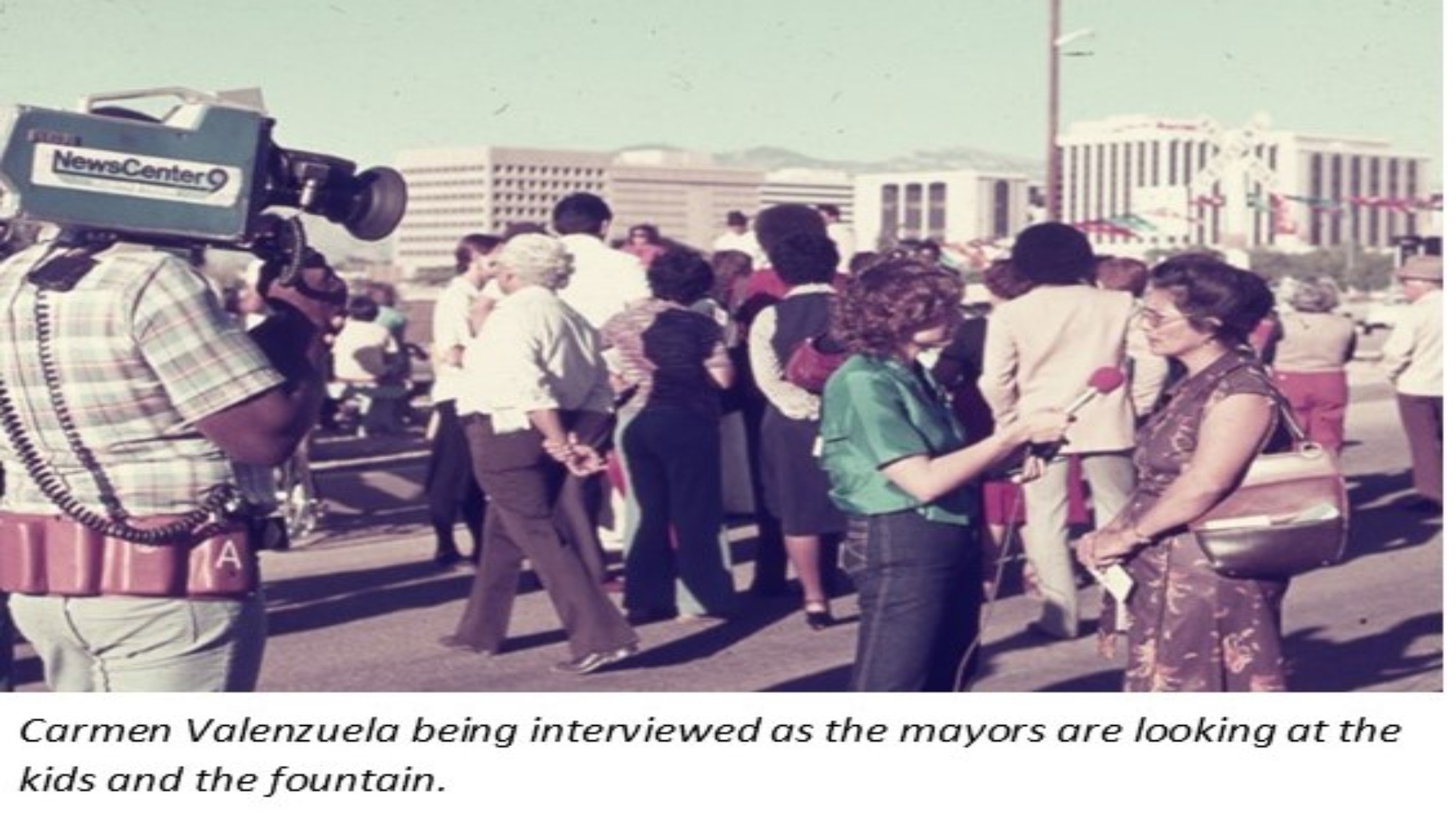
While I dislike the media intensively for their covert hypocrisy, I will still use the media to advantage whenever possible. If you can’t defeat hypocrisy, make use of it, within reason. If the media were more responsible, all the above would be null and void.
To their credit, or timidity, no police or authority tried to evict the kids from the fountain. The only advice I received from a city official was to convey to parents that the chlorine and chemicals could harm the eyes. Wow! We told the kids not to open their eyes under water and not to swallow the water.
We did do some terrible things from lack of knowledge. However, Barrio kids are not weaklings. Not only did we complain effectively, but we were doing something about our problem. We were solving it ourselves with hard work. The Barrio was fixing its own swimming pool and most importantly, we were not destroying anything. Instead, we built things. By protesting while building, we were undoing the Barrio stereotype which claims that minorities destroy their own neighborhoods as a means of complaint and protest. We were not stupid.
Of course, there was no way volunteers could fix a leaking swimming pool without funding, heavy equipment, or professional skills, but the residents of Barrio Libre possessed the skills of resolute entrepreneurs. We worked at the pool for three weekends, then went swimming in the fountain. Then the City blinked and called for a meeting.
The mayor called the City Manager Mr. Valdez, who called his Deputy City Manager Bill Eally, “This is embarrassing, look into it and solve the issue.”
The Deputy City Manager called for a meeting and seven of us from the TBA attended.
Among eighty other legal neighborhood associations, the TBA was now the legal entity representing the Barrio. How to use the law is very important.
The elected Chair of the TBA Board was Bertha Santa Cruz, from El Membrillo, one of those extraordinary humans who make the human race a proud group of people. Until then, this simple and gentle woman had never been outside of Tucson her entire life, a detail that would later change when she “held” hands while talking with the President of the United States at the White House. She was smart, alert, with an abundance of wisdom, and an understanding of life’s experiences that would put to shame any globetrotting college professor. Bertha is one clear example that intelligence, wisdom, and talent exists in equal proportions in a poor, lower income, neighborhood as in a rich, upper income neighborhood. Unfortunately, incoherent people also equally exist in both levels of society, as anyone who lives in a wealthy condominium association and has gone to a condo board meeting knows quite well.
Rocky was in and out of the City on business, so he only attended a few meetings. In his place was Ellen who was much better than I at keeping details together. She was part of our diverse group, coming to tell the City we wanted the swimming pool reopened, or else... Bertha was there. So was Ellen, and so were Morton and Willy. There were also three other Board members from the Barrio and me, in our first meeting with Deputy City Manager, Bill Eally,
“Let me start the meeting,” said Bill Eally in a pleasant tone of voice. Eally was a person I had never met but had seen him at the City Council meetings. “We, the City, are going to re-do your swimming pool. We’ll do a leak-proof swimming pool inside the old one. It is going to take some time. The bathhouse is gutted, and the place is messy. We are hiring an architect and will have plans drawn up soon to show you before we do anything, it is to be done better than before. We will report to you regularly, and I assume this is the committee we will call every time we have something to show you. Who do we call?”
“Bertha,” I said.
Bertha and four others suggested “Chuck”.
Morton and Willy said nothing.
“Contact the Board Chair and she will take care of letting everyone know,” I interjected.
I was impressed by the man. A no-nonsense-person willing to use common sense and had respect for valid arguments, traits that are very unusual for a bureaucrat.
We talked a bit longer. I wondered about his impression of that first meeting. There were many questions and Bill Eally answered each of them. He showed no impatience, no attempt to hurry, no intent to impose any decision on us, and he made no reference to the infamous swimming in the fountain.
If the mayor was pissed, we did not hear about it. Bill made us all feel important. Of course, this raised our concern, is it for real? [vii]