Contrary to public perception, the Barrio was never an isolated, forgotten, inactive spot on the map, maybe for lack of detailed scrutiny. In fact, it took some part in the incubation of peripheral activities reaching as far as Washington D.C. and reflected in the vanguard of the national consciousness. The barrio was a mini-incubator of energies affecting world power struggles.
The Barrio area and its periphery attracted many of the apparent regional misfits as well at the beginning of their misguided, desolate trail. Without judgement, I saw many things occur from the clash of cultural conflicts to the clash of cutting-edge ideologies, human power plays, political intrigue, some sorcery and even some spiritual enlightenment. Many of these new interests succeeded at passing through, or springing forth, from the entrails of Barrio Libre, where the police remained absent. Hidden and apart in this otherwise strong cultural enclave, we found pockets of the sexual revolution, gay movement, open classrooms, ecological arguments, ideology of permissiveness, racial struggles, socialistic tendencies, and ideological wedges claiming separation of the rich from the poor. I experienced many fringe activities percolating through the edges of the Barrio like in a test tube. To all appearances in a monolithic cultural neighborhood, they were crouching at the edges and mutually ignoring or co-existing with diverse elements. Peaceful and quizzical, sometimes violent, and corrupt, easygoing, and conflicting, family oriented and clashing in generational struggles. You had a Black Elks Club, a Shrine to a Sinner, a theater, three non-Catholic Christian churches, not one but two schools, some sorcery, subversive groups, art, and pottery for amulets, and much more. A point to ponder was that in their need for Hispanics to protect their existence from the status quo, they failed to see the erosion of what didn’t seem to be a threat to them from these minor fringe elements, and thus the Barrio turned a blind eye to them, but uncontrolled variety would play a part in eroding unity and leading to ultimate displacement. This happens to countries worldwide.
The beginning of this phenomenon creeps in unnoticed infiltrating in many areas because of its minor nature, but it is not different, although less dangerous, than for example the more sophisticated and growing expansion of Sharia Law imposed in no-go-zones of Muslim enclaves or neighborhoods, where their own law, clergy imposed and controlled, to the exclusion of any outside influence starts small and accepting, and then as if by surprise it is fiercely demanded and obligatory.
I learned by accidental discoveries that the Barrio served as a reservoir for certain exterior criminal activities. As I explored many of the abandoned houses, it was not unusual to find stolen merchandize piled up in them, as if it were a mini warehouse ready for future pick-up. I was told many of those deposits were made by outsiders. TVs, car parts, tools, clothing, jewelry, and more creeping in. By luck I did not collide with those in that activity. I was told these goods were there until the heat cooled down. Then the thieves would come and reclaim them and haul them away. How do you put a stop to that when in the past police never cruised through the Barrio on their own. It’s an undetected, mutating cancer. Fortunately, now the police were beginning to come if they were called upon.
Rule Number One: if you want to create positive change in society, clean your own house first! How do you do that? Even if it is outsiders who often temporarily stored their stolen merchandise, this made some sense since criminals often act on someone else’s turf, we still had a serious issue. However, even if crime statistics do not always reflect the true story, there is no excuse. How to stop all kinds of crime in an already permissive neighborhood?
I don’t want to give the wrong impression by highlighting the fringe elements, the core of the Barrio was still solid Hispanic or Latino, connected by a common language, and to their credit as well as their doom, in these cases, they lived and let live. They were fighting the system that was displacing them, but what was eating them alive and was never told by those enticing them to rebel, was the slow simmering corruption of the overall society. Core values were eroded, even deeper in Hispanic and Black cultures where they used to be strong, resulting as victims in the struggle between political good and evil.
It is not cultural appropriation, and it is not environmental pollution that will destroy us, but the pollution of our social values that we need to deal with before it will destroy us.
On the other hand, while each of us were dancing to a different tune from the beat of different drums, sharing an overlapping need to revolt against a mutual enemy, many neighborhoods gathered to form what became the Inner City Neighborhood Coalition, in this case using historicity. Also a powerful alignment that can be used by ill intended people against you. We didn’t let that happen.
A faint musical tune, or noise, I did not pay attention to it at the time despite its devastating long term effect as it built up its influence, was in the-side effect of newcomers. Outsiders coming into the Barrio have different interests and seldom, if ever, pay attention to the cultural activities and deep rooted concern of the existing residents, they bring their own. Not due to bad intentions, eroding for lack of interest the support mechanisms needed to maintain cultural unity and cohesiveness. The gentry only cares about their personal interests.
When rumors that a new on-ramp to the freeway threatened El Precidio neighborhood, with the oldest houses in the City, three of us began to organize a coalition to help. My agenda in doing so was fueled by the recognition that the Barrio, on its own, did not have sufficient weight, and a coalition of support with issues in common would raise the voting power from four hundred to four thousand people, making it a worthy effort. Others saw the same advantage[ix]. Soon other neighborhoods followed our example and applied for CDBG grants as ‘sub-recipients’. This new expansion hid our internal erosion due to newcomers.
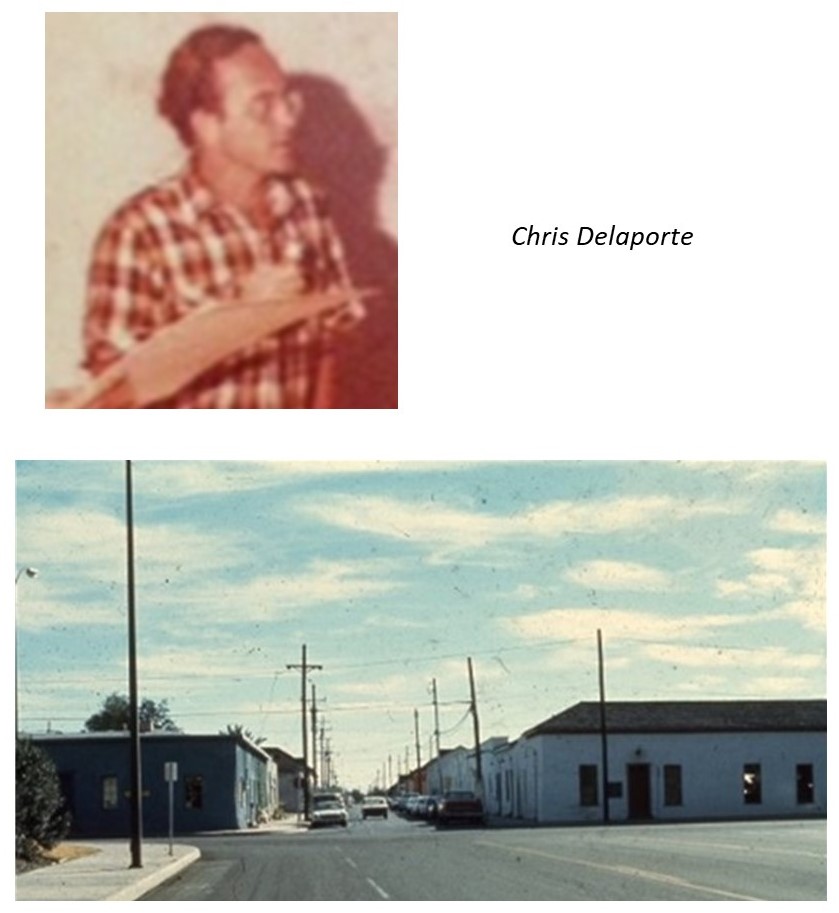
The coalition’s effort was unconsciously and fortunately aided from a different direction by a speaker from the Federal Government lecturing in many cities about the economic value of Historic restoration. His name was Chris Delaporte, and he had recently been appointed by President Jimmy Carter to the Office of Parks and Recreation and Natural Resources. Chris Delaporte was working closely with Monsignor Baroni, who was also appointed by President Carter to the Office of Neighborhoods in HUD. Delaporte was to have a profound impact on the future of Tucson, even if his name is not readily visible anywhere that I know of.
Events will show the connection between the freeway and Mr. Delaporte’s visit. Chris Delaporte, Director of Heritage Conservation and Recreation Services (HCRS), was unifying the Department of Parks and Recreation with the Department of Historic Restoration, and his speech was centered around the theme that historic restoration was no longer the hobby of old ladies in tennis shoes thanks to some tax incentives. It was now in fact an economic engine of great potential for cities across the United States.
Ellen and I accosted him as he was leaving the podium.
“We have a situation here which may apply to what you were talking about, that is the Barrio Histórico, but it needs a little bit of prior attention.” I tentatively added, “We have some serious difficulties with the establishment.” Unbeknownst to us, he was having his own issues shaking up entrenched, established bureaucracy and cronyism in Washington as well. To our future advantage, he was not a conventional individual.
Looking at his watch he said, “I will be back in Tucson in three months. I’ll make a point of giving you the time necessary to take a tour of your neighborhood.”